Choosing the wrong window size is one of the most costly mistakes in any home renovation. Standard window dimensions exist for a reason — they save time, money, and headaches.
This guide gives you a clear standard window dimensions chart, room-by-room sizes, and everything you need before buying or replacing windows in your US home.
What Are Standard Window Dimensions?
Standard window dimensions in the US are pre-set sizes that manufacturers produce in large volumes. They make ordering, shipping, and installation faster and cheaper.
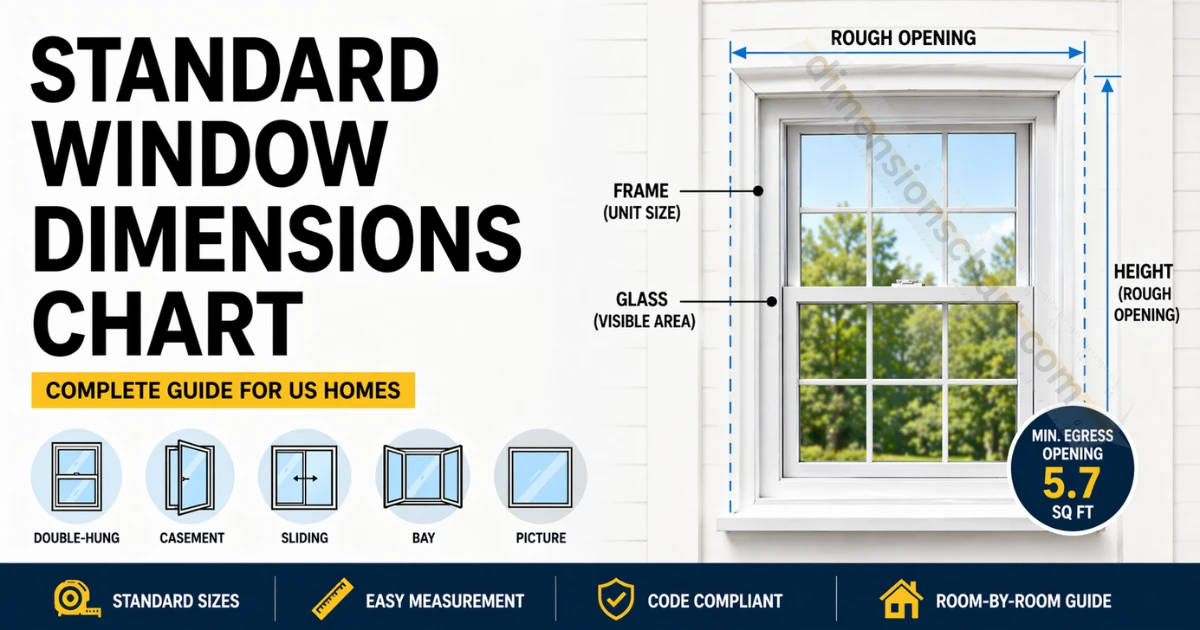
Most residential windows range from 14 to 72 inches wide and 24 to 60 inches tall, depending on the window style. Always know the difference between rough opening size (the wall opening) and frame size (the actual window unit) — the frame is typically ½ inch smaller on each side.
Window Measurement Types Explained
Standard Window Dimensions Chart by Window Type
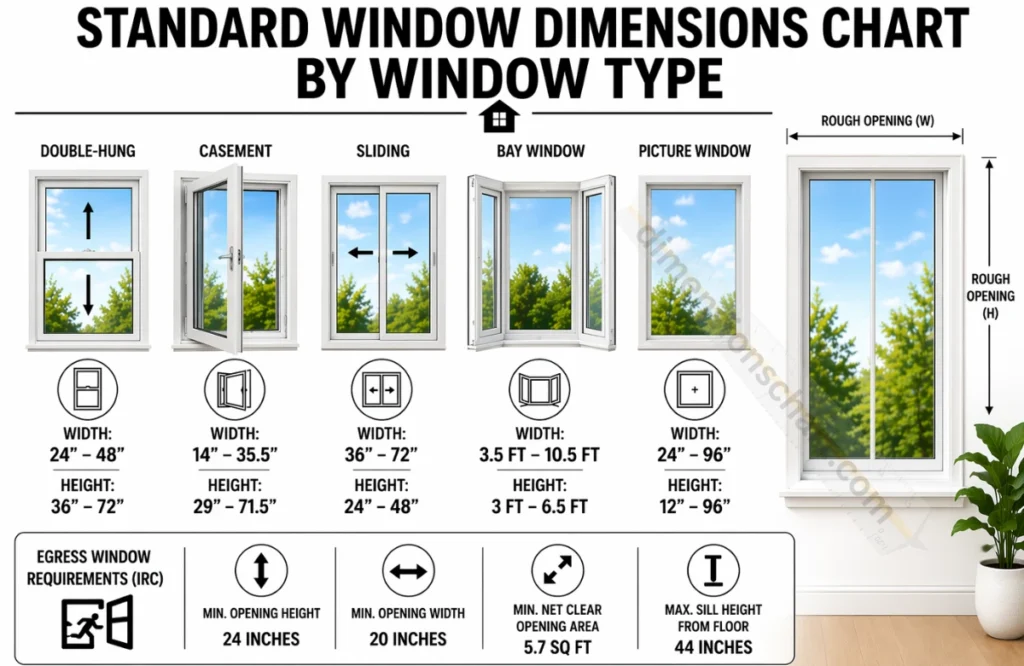
Different window styles follow different sizing rules. Here is a complete window dimensions chart broken down by type.
Double-Hung Window Dimensions
Double-hung windows are the most popular window style in American homes. They have two sashes that slide up and down.
According to the Window and Door Manufacturers Association (WDMA), double-hung windows account for nearly 55% of all residential window sales in the US.
Casement Window Dimensions
Casement windows are hinged on the side and swing outward. They seal tighter than double-hung windows and offer better energy efficiency.
Single casement windows are narrower. Double casement units combine two sashes, making them wider.
Sliding Window Dimensions
Sliding windows open horizontally. They work well in wide wall spaces where vertical room is limited.
Bay and Picture Window Dimensions
Bay windows project outward from the wall. They are wider than standard windows and create extra interior space.
Picture windows are fixed — they don’t open. They are designed purely to maximize light and views.
Egress Window Dimensions
Egress windows are a life-safety requirement. The International Residential Code (IRC) requires every sleeping room and basement to have at least one egress window.
This is the net clear open area when the window is fully open — not the total frame size. Always verify with your local building code.
Standard Window Dimensions by Room
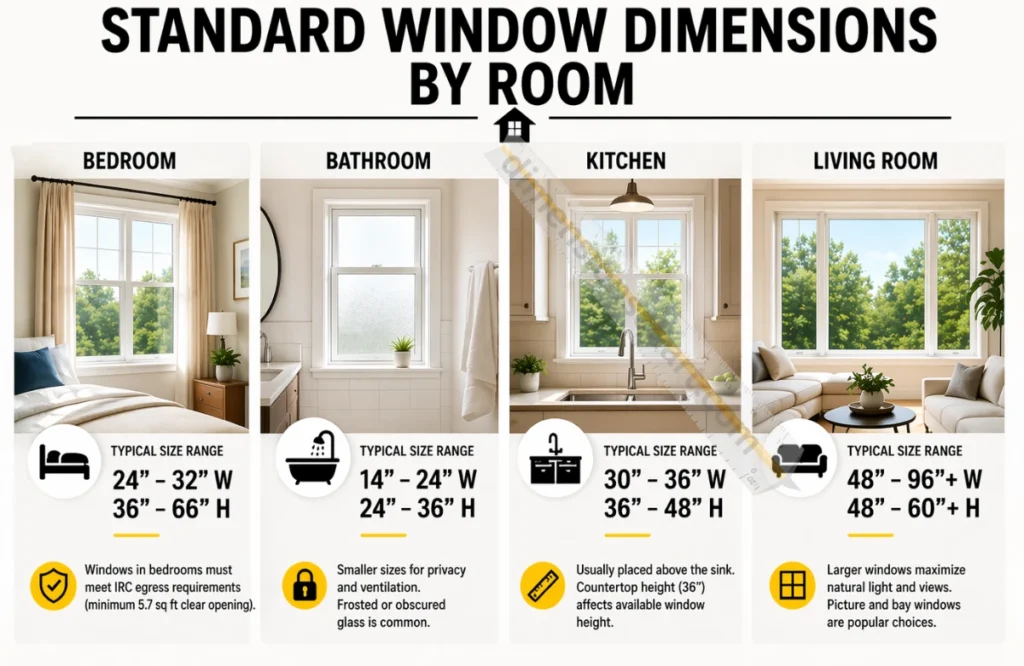
Window size varies by room based on light needs, ventilation, and privacy. Here’s what standard US construction uses.
Bedroom Window Sizes
Bedroom windows must balance natural light, privacy, and egress safety code compliance.
Any window in a sleeping room must meet IRC egress requirements — minimum 5.7 sq ft clear opening.
Bathroom Window Sizes
Bathroom windows are the smallest in the home. They prioritize ventilation and privacy over view.
Most builders use obscured or frosted glass in bathrooms to maintain privacy while allowing natural light.
Kitchen Window Sizes
Kitchen windows are usually positioned above the sink. Their height depends on your countertop height and upper cabinet depth.
The typical kitchen countertop sits at 36 inches high, which directly affects how much wall space is available for a window above it.
Living Room Window Sizes
Living room windows are the largest in the home. They maximize natural light and curb appeal.
Large picture windows and bay windows are popular choices for living rooms across US homes.
How to Measure Windows the Right Way
Measuring your window correctly is everything. One wrong number means ordering the wrong size — a costly mistake.
- Measure the rough opening width — top, middle, and bottom
- Measure the rough opening height — left, center, and right
- Always use the smallest measurement you recorded
- Subtract ½ inch from each dimension for proper installation clearance
- Use a metal tape measure held taut and straight
Always measure the rough opening, not the old window frame. Old frames shift and warp over time — they are never perfectly square.
If you are unsure, have a professional measure before you order. A window company typically offers free in-home measurement before purchase.
Conclusion
Getting your window dimensions right saves money, avoids delays, and keeps your home up to code. Use this standard window dimensions chart as your starting reference — then always verify with a professional measurement before placing your order.
The right window fit starts with the right numbers.
FAQ’s
What are standard window dimensions?
Standard window dimensions in the US typically range from 24 to 48 inches wide and 36 to 72 inches tall, depending on window type. Double-hung windows are the most common standard size found in American homes.
What size is a 2×3 window?
A 2×3 window measures 24 inches wide by 36 inches tall. It is a common size for bathrooms and smaller rooms needing ventilation without sacrificing wall space.
Is 35×70 a standard window size?
A 35×70 inch window is not a universal standard size but falls within the range most manufacturers offer for double-hung and casement styles. If unavailable off-shelf, most companies can produce it as a custom unit.
How big is a 5.7 sq ft window?
5.7 square feet is the minimum net clear opening required by IRC for egress windows. For example, an opening of 20 inches wide by 41 inches tall equals approximately 5.7 sq ft — meeting the safety requirement.
How big is a 3×3 window?
A 3×3 window measures 36 inches by 36 inches. It is a common square window used in kitchens, stairwells, and decorative applications where a balanced look is needed.
Does a 3×5 window meet egress?
A 3×5 window (36″×60″) may or may not meet egress requirements. What matters is the net clear opening when fully open — it must reach 5.7 sq ft minimum. A double-hung 3×5 only opens halfway, so always verify the actual opening size against your local building code.
How many sq ft is a standard window?
A typical 36×48 inch double-hung window has about 12 square feet of total frame area. For egress compliance, the critical number is the net clear opening — minimum 5.7 sq ft — not the total window size.

Burhan Ali is the founder and author of DimensionsChart.com, providing accurate size charts, measurements, and guides for smarter buying decisions.