Buying the wrong door is a costly mistake. One wrong measurement leads to re-framing, wasted money, and project delays.
This standard door dimensions chart covers every size you need — interior, exterior, and specialty doors — all in one place.
Standard Interior Door Dimensions Chart
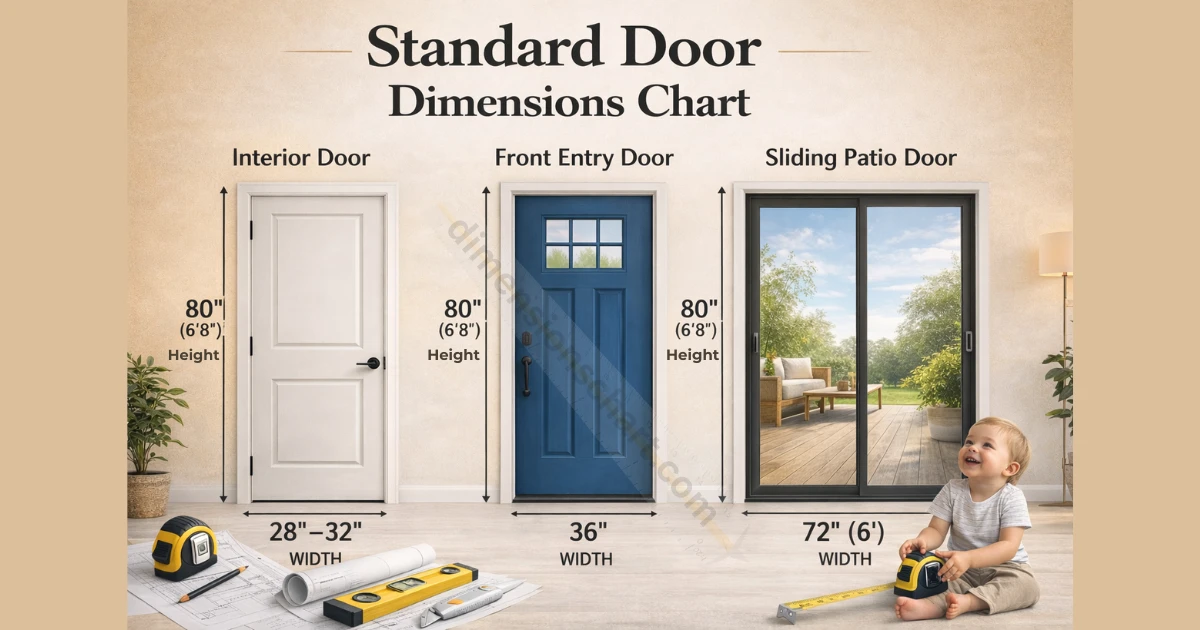
Interior doors follow consistent sizing across most US homes. The go-to height is 80 inches (6’8″) for virtually every room.
Standard Height: 80″ (6’8″)
Width is where things change. Each room has a different function — and a different recommended width to match it.
Interior Door Dimensions Chart
Door Slab vs. Pre-Hung
Door Slab
The slab is the door panel alone.
Pre-Hung Door
Includes the frame, hinges, and hardware.
Always confirm which you are buying before measuring your opening.
Standard Exterior Door Dimensions Chart
The most widely used exterior door size in the US is 36 inches wide by 80 inches tall. This meets most residential building codes and fits standard framed openings.
Width: 36″
Height: 80″
Thickness: 1¾”
Exterior doors are thicker than interior doors. The standard door thickness for exterior use is 1¾ inches — built for insulation, security, and weather resistance. Interior doors are typically only 1⅜ inches thick.
For sliding glass patio doors, the most common size is 6’8″ high by 6′ wide. Wider configurations — 5′, 8′, and even 10′ wide — are available for larger deck and patio openings in open-concept homes.
Exterior Door Dimensions Chart
How to Read a Door Dimensions Chart (Rough Opening vs. Door Slab)
How to Read a Door Dimensions Chart
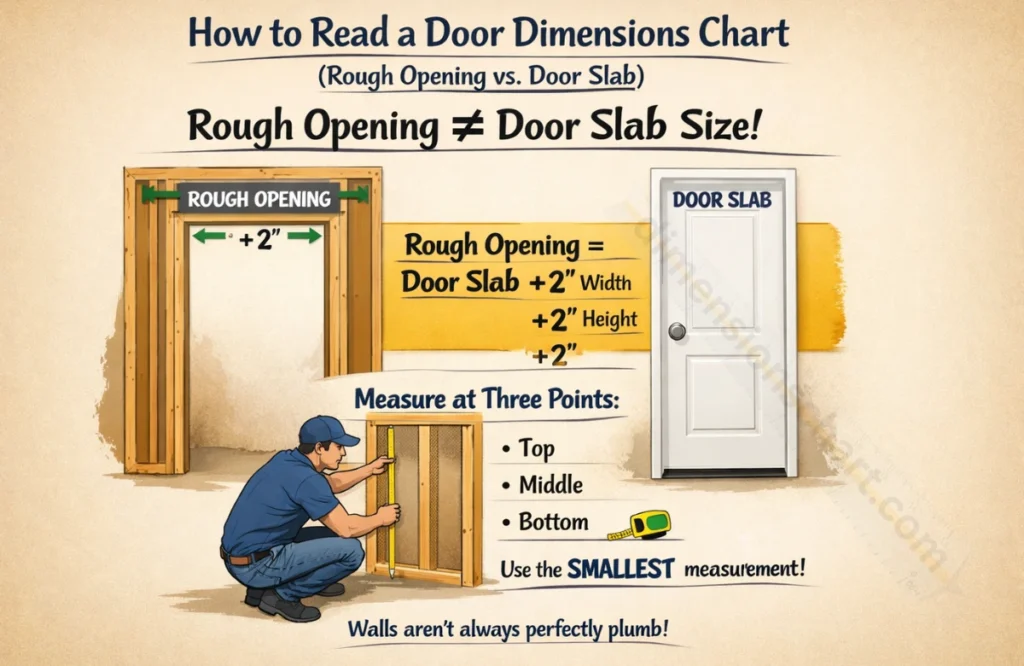
This is where most homeowners get it wrong. The size listed on any door size chart is the slab — not the rough opening you need in your wall.
Rough Opening
Wall Opening Space
Includes space for frame & adjustments
Door Slab
Actual Door Panel
Smaller than rough opening
Use this simple formula every time:
Rough opening width = slab width + 2 inches
Rough opening height = slab height + 2 inches
That extra space accommodates the frame, shimming, and leveling. The pre-hung unit sits between these two — slightly smaller than the rough opening, leaving roughly ½ inch per side for adjustment.
Always measure your wall opening at three points — top, middle, and bottom. Walls are rarely perfectly plumb. Use the smallest measurement as your working dimension.
ADA and Building Code Door Size Requirements in the US
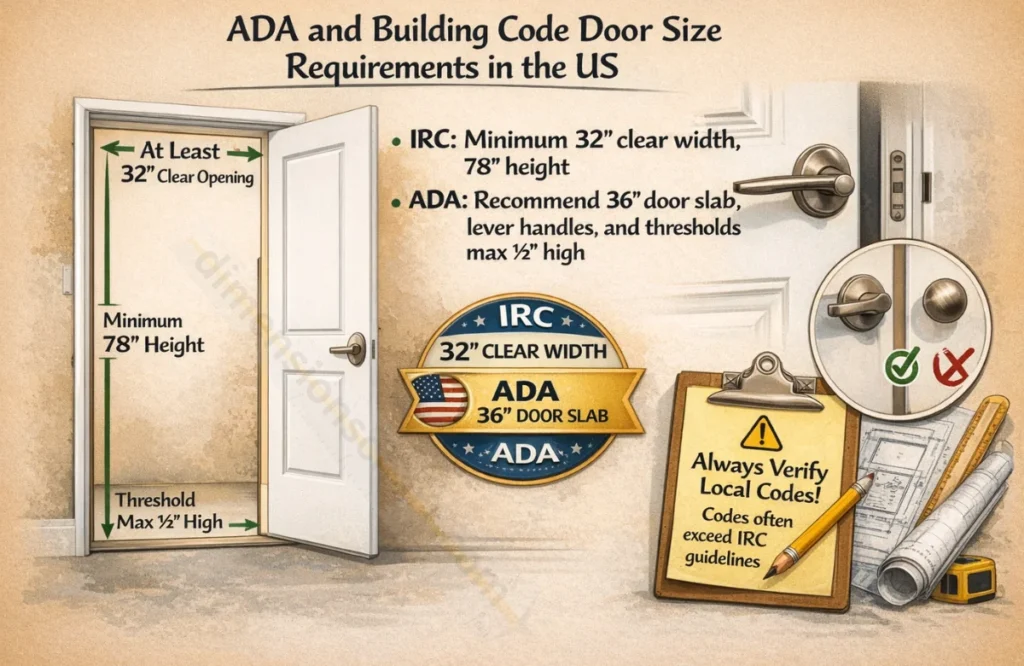
Wrong door sizing can mean a building code violation. The International Residential Code (IRC) requires the primary egress door to have a minimum clear width of 32 inches and a minimum height of 78 inches.
The Americans with Disabilities Act (ADA) recommends a 36-inch door slab to achieve that 32-inch clear opening after the frame is factored in. Door thresholds must not exceed ½ inch in height. Lever-style handles are preferred over round knobs for accessible, code-compliant entry.
Always verify with your local municipality. State and county codes often go beyond the IRC baseline — especially in renovations or commercial-adjacent residential builds.
Conclusion
Using the correct standard door dimensions chart from the beginning saves you money, time, and frustration. Measure the rough opening accurately, understand the difference between slab and pre-hung sizing, and always check your local building codes before ordering.
Get the measurements right once — and your door fits, functions, and performs for decades.
FAQ’s
What is the standard size for a door?
The standard exterior door size in the US is 36″ wide by 80″ tall. Interior doors are typically 80″ tall with widths from 24″ to 36″ depending on the room. These are the sizes stocked by most major US manufacturers and supported by residential building codes.
Is a 36 door actually 36 wide?
Not exactly. A “36-inch door” is the slab width. Once installed inside a pre-hung frame, the actual clear opening is closer to 33½” to 34″. The jamb and frame take up the remaining space on both sides.
Is a 32 inch door common?
Yes, very common. A 32-inch door is a standard choice for bedrooms and hallways across the US. It also satisfies ADA clear-width guidelines when paired with the correct maneuvering clearance on both sides of the opening.
How many inches is a 7 ft door?
A 7-foot door is exactly 84 inches tall. It is a popular choice in newer homes with higher ceilings and is carried as a stock size by most major US door brands.
What size is a 2 ft door?
A 2-foot door is 24 inches wide — the narrowest standard door size in the US. It is used mainly for utility closets, pantries, or tight storage areas and is not suitable for bedroom or bathroom entry.
Is a 42 door standard?
A 42-inch door is not a typical residential stock size. It is available as an extended option, most often used for grand entries, luxury builds, or spaces requiring enhanced accessibility beyond ADA minimums.

Burhan Ali is the founder and author of DimensionsChart.com, providing accurate size charts, measurements, and guides for smarter buying decisions.