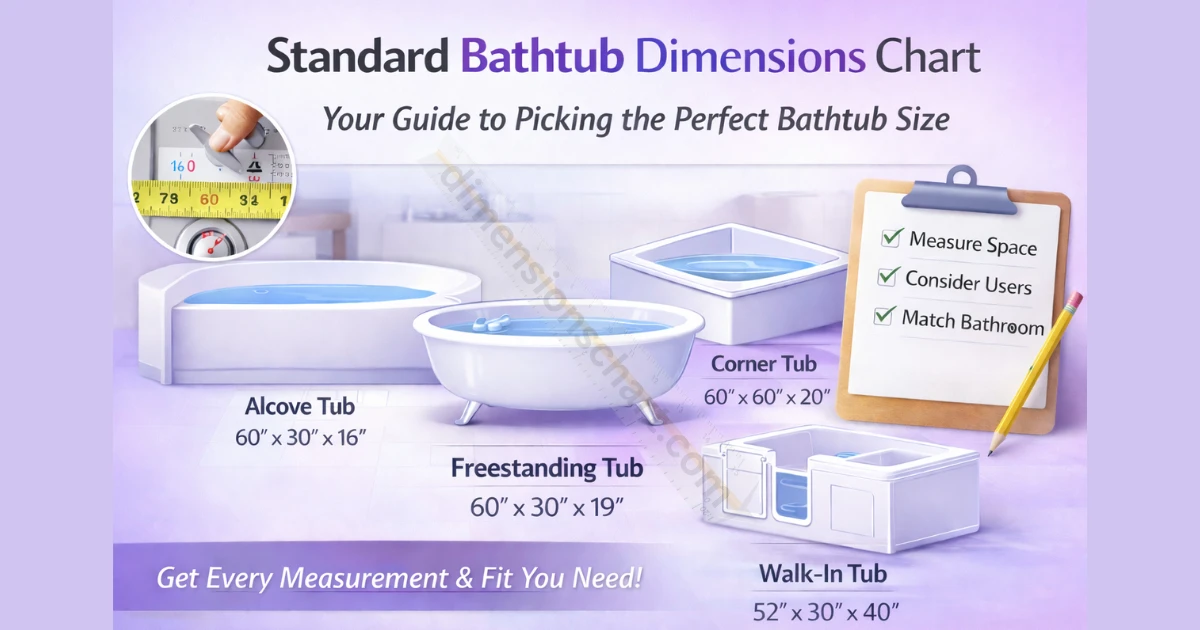
Picking the wrong bathtub size is one of the most expensive renovation mistakes you can make. The wrong fit means costly plumbing changes, tile rework, and wasted time.
This guide gives you the standard bathtub dimensions chart, a full breakdown by tub type, and a simple decision framework. Everything you need — before you buy.
What Are Standard Bathtub Dimensions?
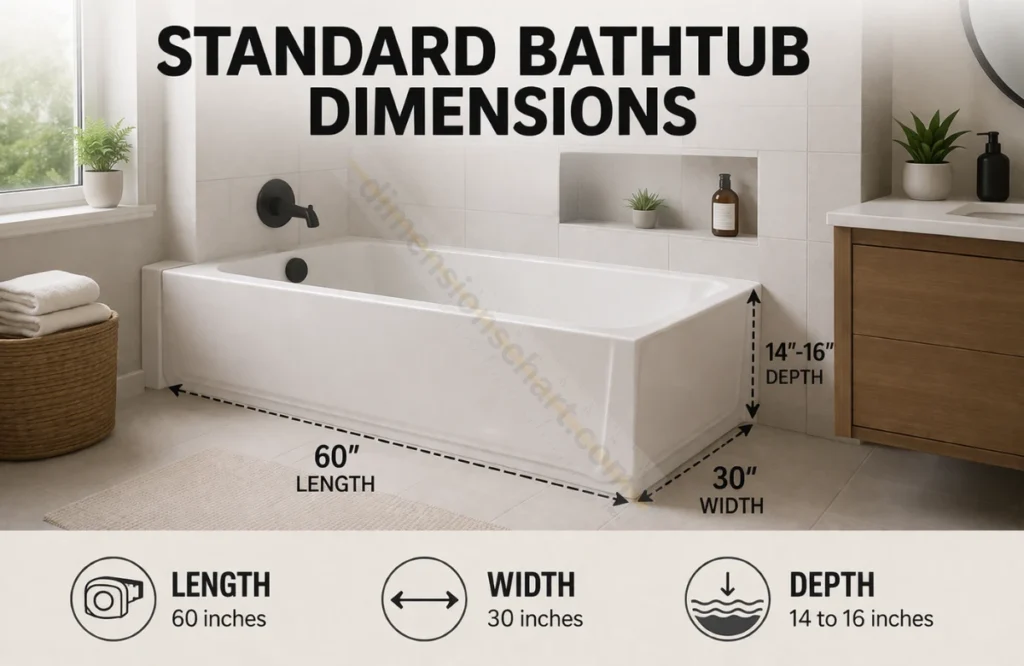
The standard bathtub size in the U.S. is 60 inches long, 30 inches wide, and 14 to 16 inches deep. That’s the baseline most American homes are built around.
This size fits the 5-foot alcove opening that has been the residential building standard for decades. According to the National Kitchen and Bath Association (NKBA), most American bathrooms are designed with this footprint in mind.
But “standard” is just a starting point. Bathtub measurements vary by type, shape, and manufacturer. Knowing the actual range helps you shop smarter and avoid surprises during installation.
The most important numbers to track are length, width, and water depth. These three measurements determine comfort, fit, and how much hot water your heater needs to supply.
| Tub Type | Small | Standard | Large | Depth Range |
|---|---|---|---|---|
| Alcove | 54″×30″×14″ | 60″×30″×16″ | 72″×36″×20″ | 14–20″ |
| Freestanding | 55″×27″×15″ | 60″×30″×19″ | 72″×32″×20″ | 15–24″ |
| Drop-In | 45″×30″×14″ | 60″×32″×16″ | 72″×42″×20″ | 14–20″ |
| Corner | 48″×48″×20″ | 60″×60″×20″ | 72″×72″×22″ | 18–22″ |
| Soaking | 48″×28″×20″ | 60″×32″×24″ | 72″×40″×24″ | 20–24″ |
| Walk-In | 48″×28″×36″ | 52″×30″×40″ | 60″×32″×48″ | 36–48″ |
| Whirlpool | 48″×48″×18″ | 60″×36″×20″ | 72″×72″×22″ | 18–22″ |
Tip: Alcove tubs are available in left-drain and right-drain models. Confirm your plumbing rough-in location before purchasing to avoid installation issues.
Bathtub Dimensions Breakdown — Type by Type
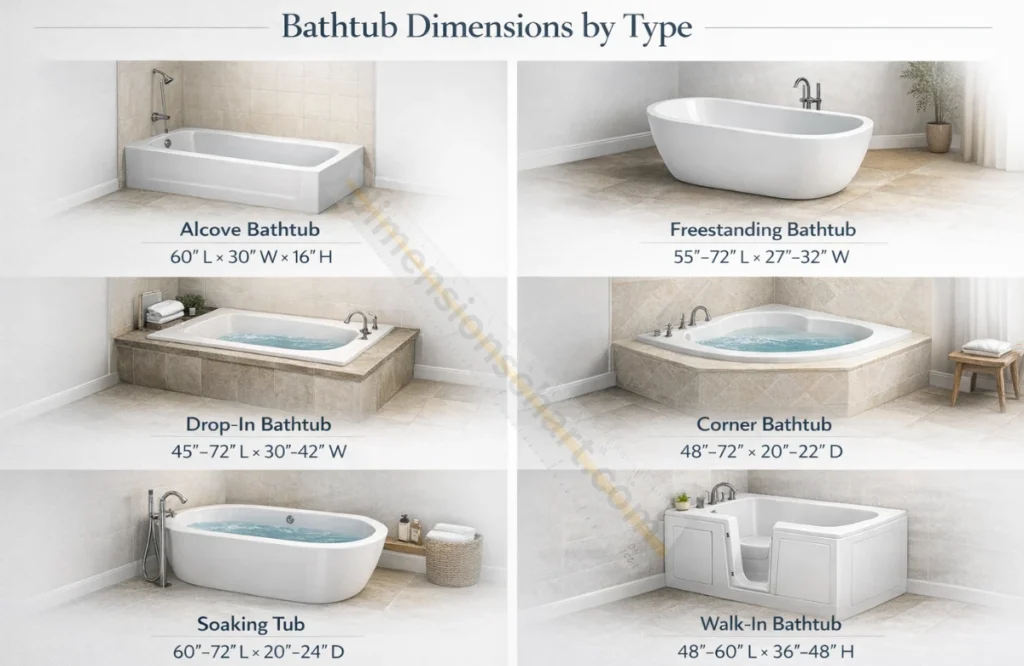
Each tub style has a different footprint, installation method, and ideal use case. Here’s what every bathtub type actually delivers in terms of real-world dimensions and fit.
Alcove Bathtub
Most common bathtub in homes. Installed between three walls and usually combined with a shower setup.
Smaller versions start at 54 inches, while larger models reach 72 inches. Interior usable length on a standard tub is about 54–56 inches.
Freestanding Bathtub
A statement piece placed away from walls. Requires open clearance around all sides for plumbing and access.
Widths range from 27″–32″ and height from 15″–24″. Many models hold 80–100 gallons of water.
Drop-In Bathtub
Installed inside a built deck or tiled platform, creating a seamless built-in bathroom design.
Width varies from 30″–42″ with depths of 14″–20″. The surrounding deck adds extra floor footprint.
Corner Bathtub
Designed to sit in a bathroom corner while maximizing interior soaking space.
Depths usually range from 20–22 inches. Often paired with whirlpool or jetted systems.
Soaking Tub
Designed for deeper immersion rather than length, providing a spa-like bathing experience.
Typical lengths range from 60″–72″. Japanese soaking tubs can be shorter but much deeper.
Walk-In Tub
Built for accessibility with a door entry, built-in seat, and high walls for safety.
Compact 48″–60″ length allows installation in smaller bathrooms and aging-in-place renovations.
How to Choose the Right Bathtub Size for Your Bathroom
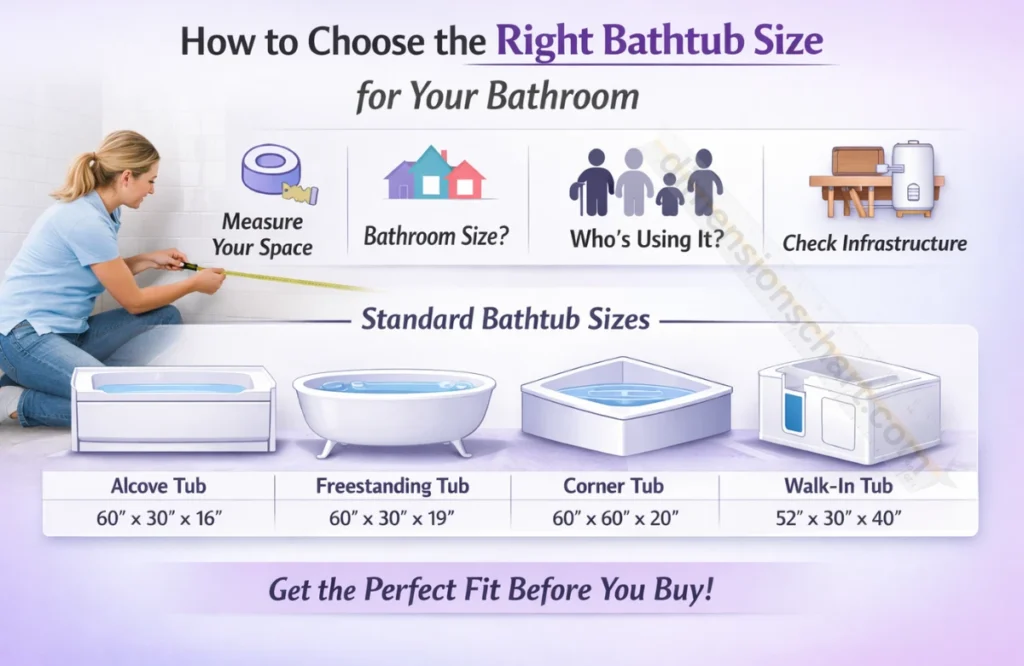
Getting the right bathtub size isn’t just about what fits. It’s about what works for your space, your body, and your daily routine. Follow these steps before you buy.
Measure Your Space First
Measure wall-to-wall length and width where the tub will sit. Also check the door width and any hallways the tub must pass through — oversized freestanding tubs often don’t fit through standard 32″ doorways.
Leave at least 15–18 inches of clearance from the tub edge to the toilet or vanity. Overhead clearance matters too if you’re adding a shower above an alcove tub.
Match Tub Size to Your Bathroom Footprint
Small bathroom (under 50 sq ft): Go with a standard alcove tub or compact drop-in. A 60″ alcove is your most space-efficient bet.
Medium bathroom: Standard alcove, freestanding, or soaking tub all work. A 66″ freestanding tub strikes the right balance between comfort and footprint.
Large primary bathroom: Explore freestanding, corner, whirlpool, or double-ended soaking tubs. You have room to prioritize comfort and aesthetics.
Think About Who’s Using It
Taller adults (over 5’10”) should avoid 60″ tubs if comfort is the priority. A 66″ or 72″ tub offers meaningful extra legroom.
For households with young children, a standard alcove tub with a low rim (14–16″) is the safest, easiest option. For elderly users or anyone with mobility concerns, a walk-in tub is the medically sound choice.
Check Your Infrastructure
Larger tubs require more hot water. A standard 60″ alcove tub holds about 60–80 gallons at capacity. A freestanding soaking tub can exceed 100 gallons — most standard water heaters can’t fill that in one cycle.
Heavy tubs — especially cast iron models — can weigh 300–500 lbs when empty. Older floor joists may require structural reinforcement before installation. Always consult a licensed contractor.
Conclusion
The standard bathtub dimensions of 60″×30″×16″ are the foundation — but the right tub for your bathroom depends on your space, your household, and your infrastructure.
Use the bathtub dimensions chart above before you shop. Measure twice, confirm your plumbing rough-in, and match the tub type to your bathroom size. That’s how you get it right the first time.
FAQ’s
What is the size of a standard bathtub?
A standard bathtub in the United States measures 60 inches long, 30 inches wide, and 14 to 16 inches deep. This is the size built into most American bathrooms and is what plumbers, contractors, and manufacturers use as the default reference point.
Is a standard tub 30 or 32 inches wide?
Most standard alcove tubs are 30 inches wide. Drop-in and some freestanding tubs run 32 inches. The 30″ width fits the typical U.S. bathroom layout without crowding nearby fixtures like toilets or vanities.
Is there a 4 ft bathtub?
Yes. 4-foot (48-inch) bathtubs exist and work well in very small bathrooms, converted powder rooms, or kids’ baths. They’re functional but short — most adults can’t stretch out fully, so they’re best for quick bathing or secondary bathrooms.
Is a 55 inch tub too small?
A 55-inch tub works for shorter adults but feels cramped for anyone over 5’8″. The usable interior length is only about 49–51 inches once the sloped backrest is counted. It’s a workable compromise when a 60″ tub won’t fit, but not ideal for leisurely soaking.
Is a 54 inch tub big enough?
A 54-inch bathtub is fine for kids and shorter adults doing quick baths. For taller adults wanting a relaxing soak, it’s too short. If a 54″ is your only option, choose a model with extra water depth to compensate for the limited length.
What are the 4 types of baths?
The four main bathtub types found in American homes are: alcove tubs (the most common, in a 3-wall recess), freestanding tubs (standalone statement pieces), drop-in tubs (set into a tiled deck), and walk-in tubs (designed for accessibility with a door entry). Corner and soaking tubs are widely used but are generally sub-categories of these four core styles.

Burhan Ali is the founder and author of DimensionsChart.com, providing accurate size charts, measurements, and guides for smarter buying decisions.