Pickleball is now the fastest-growing sport in America. Over 36.5 million players are already on the court — and millions more are planning to build one.
But before you pour a single inch of concrete, you need the right pickleball court dimensions chart. Wrong measurements mean wasted money, failed inspections, and unplayable surfaces.
This guide gives you every number, every measurement, and every decision you need — in plain English.
Official Pickleball Court Dimensions Chart (Measurements & Layout)
Standard Court Size: 44 ft × 20 ft Explained
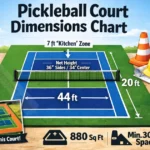
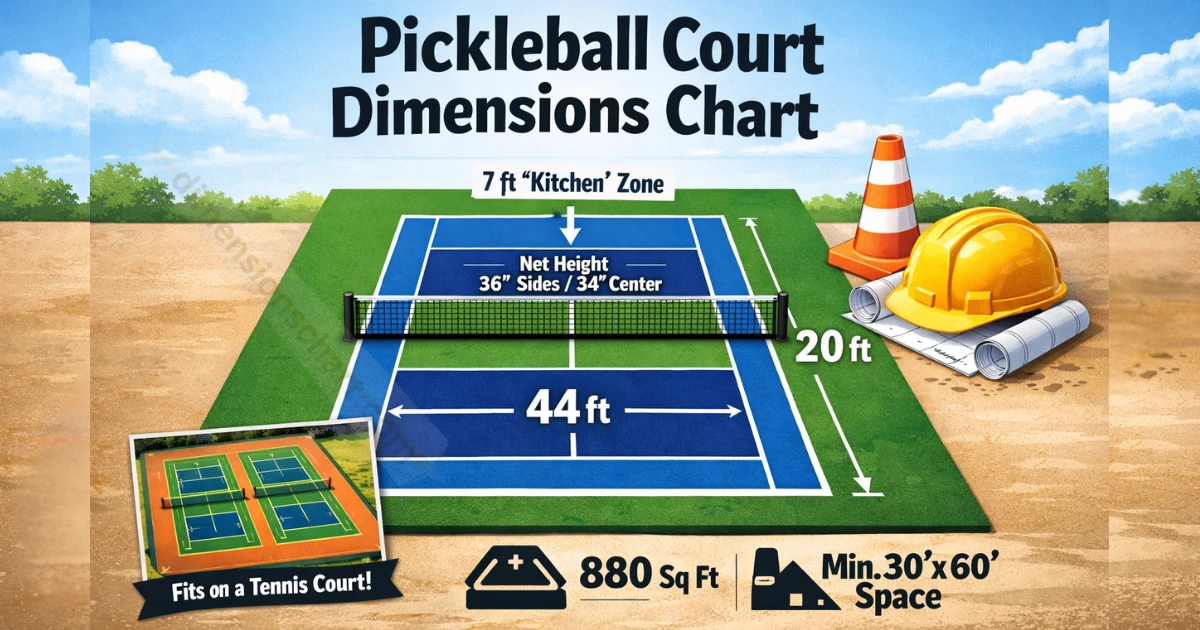
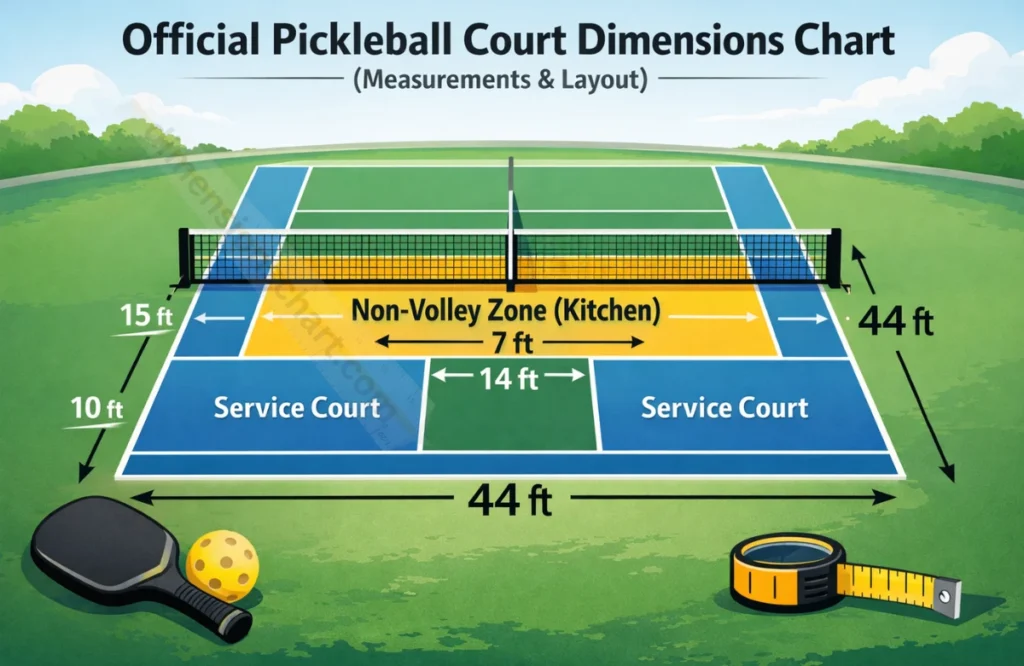
A regulation pickleball court measures 44 feet long and 20 feet wide. That’s the full playing surface — used for both singles and doubles.
Unlike tennis, pickleball does not shrink the court for singles play. The size stays the same no matter how many players are on each side.
Non-Volley Zone (Kitchen) Dimensions
The non-volley zone — called the kitchen — extends exactly 7 feet from the net on both sides. That creates a 14-foot total zone across the middle of the court.
No player can volley the ball while standing inside the kitchen. It’s the zone that defines pickleball strategy more than any other part of the court.
Net Height, Service Courts & Centerline Measurements
The net height is 36 inches at the sidelines and drops to 34 inches at the center. That slight sag is intentional and part of official USA Pickleball standards.
Each side has two service courts measuring 15 feet long by 10 feet wide, divided by a centerline running from the kitchen to the baseline.
Pickleball Court Dimensions Chart in Feet and Meters
Pickleball Court Dimensions
| Measurement | Feet | Meters |
|---|---|---|
| 📏 Total Court Length | 44 ft | 13.41 m |
| 📐 Total Court Width | 20 ft | 6.10 m |
| 🍳 Kitchen Depth | 7 ft | 2.13 m |
| 🎯 Service Court Length | 15 ft | 4.57 m |
| 🎯 Service Court Width | 10 ft | 3.05 m |
| 🏐 Net Height (Sides) | 36 in | 0.914 m |
| 🏐 Net Height (Center) | 34 in | 0.864 m |
| 📏 Line Width | 2 in | 5.08 cm |
How Much Total Space Do You Need for a Pickleball Court?
Minimum Space Requirements (30 ft × 60 ft)
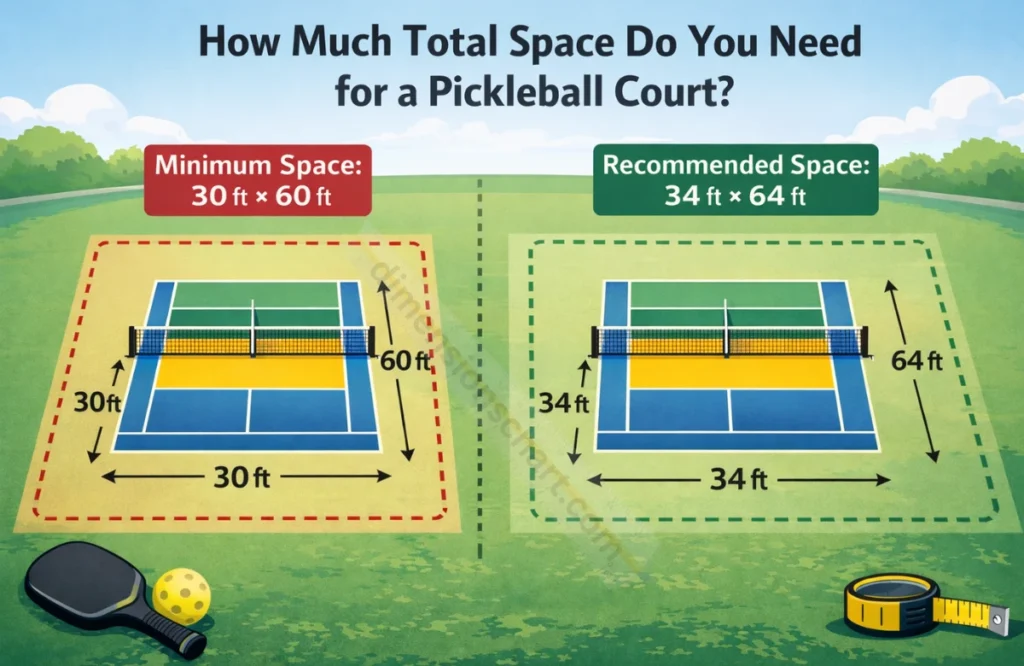
The absolute minimum space for a pickleball court is 30 feet wide by 60 feet long. This gives you the playing surface plus very tight buffer zones on all sides.
This size works for casual backyard play. But players who move aggressively or chase wide shots will quickly run out of room.
Recommended Tournament-Grade Space (34 ft × 64 ft)
For safe, serious play, the recommended total space is 34 feet wide by 64 feet long. This includes a 10-foot buffer behind each baseline and 5-foot margins along both sidelines.
Professional and tournament facilities always use this standard or larger. It protects players from injury and allows confident, full-speed play.
Multi-Court Spacing & Buffer Zone Guidelines
Between two adjacent courts, you need at least 10 to 15 feet of separation. This stops balls from rolling into active play areas and gives players room to move safely.
Community centers and sports complexes building multiple courts should budget for this spacing from the very beginning — retrofitting it later is expensive.
Pickleball Court Space Requirements
| Court Type | Total Width | Total Length | Best For |
|---|---|---|---|
| 🏡 Minimum | 30 ft | 60 ft | Backyard / Casual |
| 🎯 Recommended | 34 ft | 64 ft | Club / Competitive |
| 🏆 Professional | 40+ ft | 70+ ft | Tournament / Spectator |
Pickleball Court Size Compared to Tennis, Badminton & Basketball
Pickleball vs Tennis Court Size
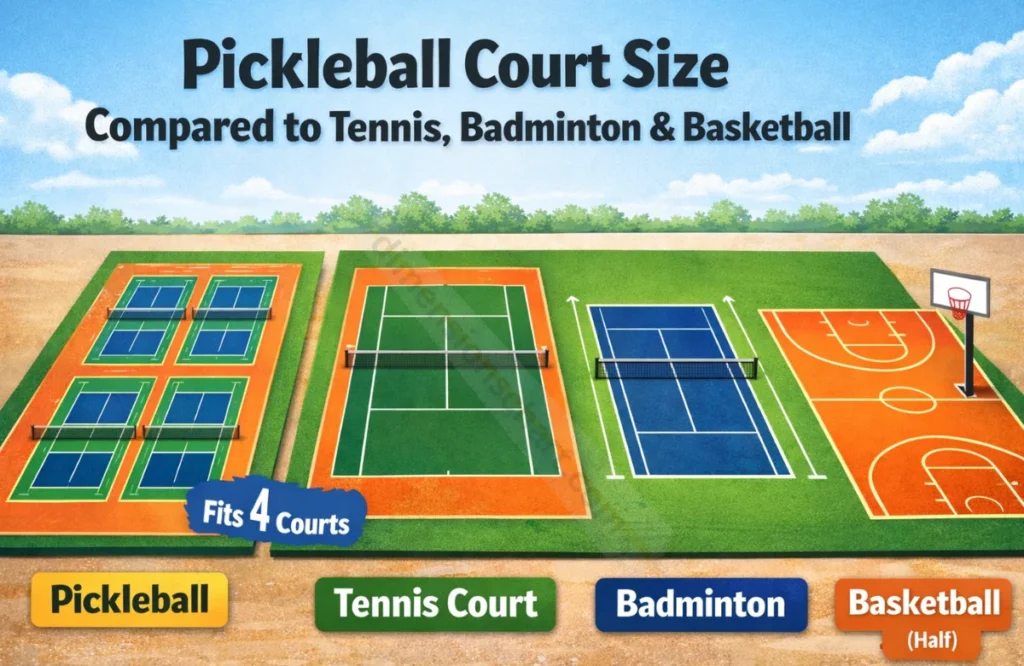
A standard tennis court is 78 feet long and 36 feet wide for doubles — nearly four times the area of a pickleball court. The difference is massive.
Four pickleball courts fit inside one tennis court with proper layout. This is exactly why communities are converting unused tennis facilities into pickleball complexes across the country.
Pickleball vs Badminton Court Size
This one surprises most people. A doubles badminton court is 44 feet long and 20 feet wide — the exact same footprint as a pickleball court.
The key difference is in the zones, net height, and line markings. You cannot use one sport’s markings for the other, but the underlying court space is interchangeable.
Can You Fit a Pickleball Court on a Tennis Court?
Yes — easily. A standard tennis court gives you enough room for four full pickleball courts with room left over for buffer zones.
Many facilities use temporary tape or painted lines to create pickleball zones on existing tennis surfaces. It’s one of the most cost-effective conversion projects in recreational sports today.
Court Size Comparison
| Sport | Length | Width | Area |
|---|---|---|---|
| 🏓 Pickleball | 44 ft | 20 ft | 880 sq ft |
| 🏸 Badminton (Doubles) | 44 ft | 20 ft | 880 sq ft |
| 🎾 Tennis (Doubles) | 78 ft | 36 ft | 2,808 sq ft |
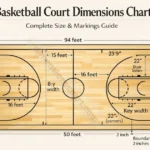
| 🏀 Basketball (Half Court) | 47 ft | 50 ft | 2,350 sq ft |
Best Surfaces & Cheapest Ways to Build a Pickleball Court
Surface Material Options: Asphalt, Concrete, Acrylic & Modular Tiles
Asphalt: The most popular outdoor choice. Costs $5 to $10 per square foot installed and delivers solid, consistent ball bounce.
Concrete: Lasts 20+ years and handles freeze-thaw climates better. Runs $8 to $15 per square foot and requires minimal long-term maintenance.
Cushioned Acrylic: Systems like Plexipave or DecoTurf reduce joint impact by up to 40% and are the gold standard for serious facilities, costing $12 to $20 per square foot.
Modular Interlocking Tiles: The go-to DIY option at $3 to $6 per square foot for materials alone.
Cost Breakdown by Surface Type
Pickleball Court Surface Costs
| Surface | Cost Per Sq Ft | Lifespan | Best For |
|---|---|---|---|
| 🧩 Modular Tiles | $3–$6 | 10–15 yrs | DIY / Portable |
| 🛣️ Asphalt | $5–$10 | 15–20 yrs | Outdoor Permanent |
| 🏗️ Concrete | $8–$15 | 20–30 yrs | High-Traffic / Cold Climates |
| 🎾 Cushioned Acrylic | $12–$20 | 10–15 yrs | Competitive / Pro Facilities |
DIY vs Professional Installation: What to Know Before You Build
Hire a Professional First: Always hire a professional for base preparation and drainage — even if you DIY everything else. Poor grading can lead to water pooling, cracks, and surface failure within a few years.
Permits & Local Rules: Permits are required in most U.S. municipalities for permanent court construction. Always check zoning laws, HOA restrictions, and property setback requirements before starting.
Project Timeline: From planning to a playable court, the full process typically takes around 2 to 6 weeks depending on complexity.
Indoor vs Outdoor Pickleball Court Dimensions
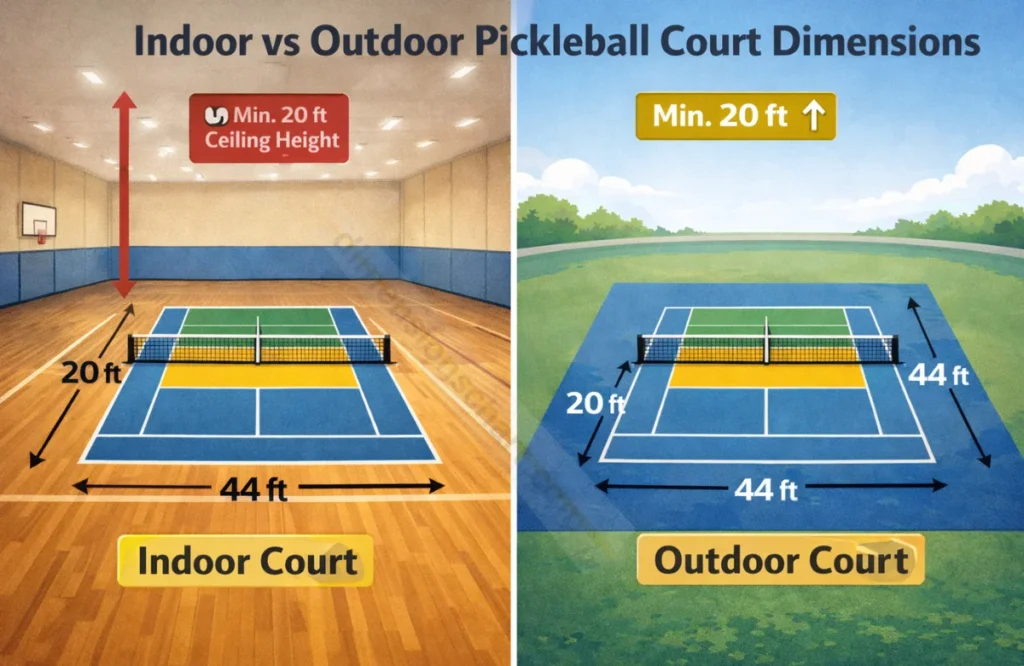
Do Indoor Courts Use the Same Dimensions?
Yes. Indoor pickleball courts use the exact same 44 ft × 20 ft playing surface as outdoor courts. USA Pickleball does not change official dimensions based on venue type.
What changes indoors is the surrounding infrastructure — ceiling height, flooring material, and lighting conditions.
Ceiling Height Requirements for Indoor Courts
USA Pickleball recommends a minimum ceiling clearance of 20 feet above the court surface. This allows lobs and high arching shots to clear without obstruction.
Gymnasiums and converted sports halls often meet this standard. Low-ceiling venues under 18 feet can still host recreational play but will limit certain shot types significantly.
Surface & Lighting Differences That Affect Play
Indoor Surface Types: Indoor courts use hardwood, sport vinyl, or rubber-cushioned flooring. These surfaces provide better grip and reduce joint impact compared to outdoor asphalt.
Better Performance & Comfort: High-quality indoor flooring improves player stability and ensures smoother movement during extended gameplay sessions.
Lighting Requirements: Courts should have at least 50 foot-candles of even lighting. Proper illumination reduces shadows, improves ball tracking, and enhances player safety.
Conclusion
Getting your pickleball court dimensions right from the start saves time, money, and headaches. A regulation 44 ft × 20 ft court with proper buffers, the right surface, and correct net height gives you a court that plays well and lasts for years.
Whether you’re building a backyard court or planning a full facility, use this pickleball court dimensions chart as your go-to reference — and build it right the first time.
FAQs
What are the dimensions of a pickleball court?
A regulation pickleball court is 44 feet long and 20 feet wide. The kitchen extends 7 feet from the net on each side, and the net stands 36 inches at the sidelines and 34 inches at the center. These are official USA Pickleball standards.
Is pickleball good for osteoporosis?
Yes. Pickleball is a weight-bearing sport that helps stimulate bone density — which is critical for managing osteoporosis. The compact court size makes it accessible for older adults without the high-impact stress of running or jumping sports. Many physicians actively recommend it for adults over 50.
What is the cheapest way to build a pickleball court?
Converting an existing hard surface with line tape and a portable net is the most budget-friendly option. If building from scratch, asphalt at $5–$10 per square foot is the most affordable permanent choice. Modular tiles are cheapest for DIY at $3–$6 per square foot for materials.
Is pickleball court size the same as badminton?
Doubles badminton and pickleball share the same 44 ft × 20 ft footprint — yes. However, singles badminton is only 17 feet wide, while pickleball uses 20 feet for both formats. The line markings and zones are completely different between the two sports.
Which city banned pickleball?
No major U.S. city has issued a full permanent ban. However, neighborhoods in Rancho Santa Fe, California and parts of Naples, Florida have faced ordinance debates and noise restrictions due to the distinct sound of paddle play. Many municipalities have enforced court curfews rather than outright bans.
What is the 10 second rule in pickleball?
Once the score is called, the server has exactly 10 seconds to execute the serve. Failing to serve in time results in a fault. This rule is enforced in all USA Pickleball sanctioned play and keeps match pace consistent at every level.

Burhan Ali is the founder and author of DimensionsChart.com, providing accurate size charts, measurements, and guides for smarter buying decisions.