When I started planning my pantry storage and bulk food purchases, I realized how confusing food can dimensions can be. Understanding exact measurements helps with storage planning, recipe conversions, and smart shopping decisions.
This guide breaks down the complete food can dimensions chart with precise measurements, industry codes, and practical applications. Here’s everything you need to know about standard can sizes in the USA.
Complete Food Can Dimensions Chart
Food can dimensions follow a standardized coding system used across the USA food industry. These measurements ensure consistency in manufacturing, storage, and recipe planning.
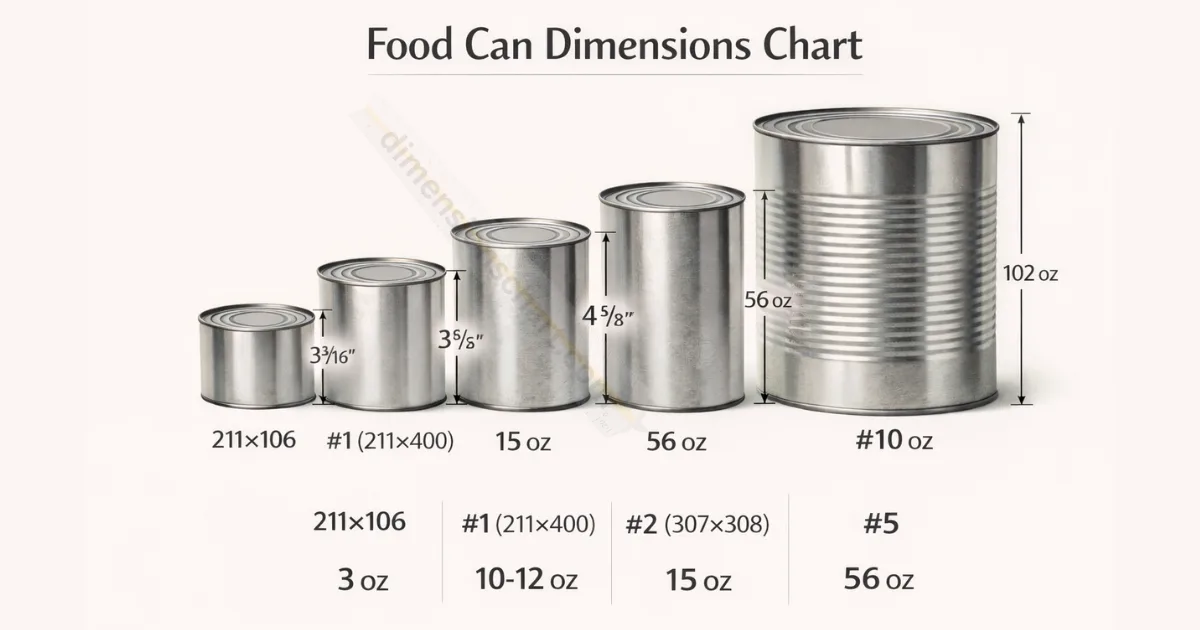
The can size chart below shows all standard dimensions with their codes and common uses:
| Can Size Code | Diameter | Height | Volume | Cups | Common Contents | Weight Range |
|---|---|---|---|---|---|---|
| 211×106 | 2 11/16″ (68mm) | 1 6/16″ (41mm) | 3 oz | 0.375 cups | Baby food, tomato paste | 3–4 oz |
| #1 (211×400) | 2 11/16″ (68mm) | 4″ (101mm) | 10–12 oz | 1.25 cups | Fruit, condensed soup | 10–12 oz |
| 307×200 | 3 7/16″ (87mm) | 2″ (51mm) | 8 oz | 1 cup | Tomato sauce | 8 oz |
| #2 (307×308) | 3 7/16″ (87mm) | 3 1/2″ (89mm) | 13–16 oz | 1.75–2 cups | Beans, vegetables | 14–16 oz |
| 300 | 3″ (76mm) | 4 7/16″ (113mm) | 15 oz | 1.875 cups | Soups, beans | 14–15 oz |
| 303 | 3 3/16″ (81mm) | 4 3/8″ (111mm) | 16–17 oz | 2 cups | Stewed tomatoes | 16–17 oz |
| 307 | 3 7/16″ (87mm) | 4 15/16″ (125mm) | 19–22 oz | 2.4 cups | Larger vegetables | 18–22 oz |
| #2.5 (401×411) | 4 1/16″ (103mm) | 4 11/16″ (119mm) | 26–28 oz | 3.25–3.5 cups | Pie filling | 26–30 oz |
| 401×510 | 4 1/16″ (103mm) | 5 10/16″ (144mm) | 32 oz | 4 cups | Large sauces | 28–32 oz |
| #3 Cylinder | 4 1/4″ (108mm) | 4 7/8″ (124mm) | 46 oz | 5.75 cups | Fruit juice | 46–51 oz |
| #5 | 5 1/8″ (130mm) | 5 7/8″ (149mm) | 56 oz | 7 cups | Institutional soups | 56–64 oz |
| #10 (603×700) | 6 3/16″ (157mm) | 7″ (178mm) | 102–105 oz | 12–13 cups | Bulk vegetables | 6–7 lbs |
Small Cans (3–12 oz)
Best for single servings and baby food. Ideal for portion control and minimal waste.
Medium Cans (13–28 oz)
Perfect for family meals and everyday cooking. Common for beans, vegetables, and soups.
Large Cans (46–105 oz)
Designed for restaurants and bulk prep. Maximizes efficiency and storage planning.
The can diameter and can height measurements directly affect shelf space, storage efficiency, and portion control. Professional kitchens rely on these standardized dimensions for inventory planning and equipment compatibility.
Standard Can Size Codes
Standard can size codes use a unique numbering system based on diameter and height measurements. The code 303, for example, means 3 3/16 inches in diameter.
The first digit represents the can diameter in inches. The following digits show the height in sixteenths of an inch. A 307×406 code translates to 3 7/16″ diameter × 4 6/16″ height.
Industry standardization began in the early 1900s to streamline manufacturing and distribution. This coding system allows manufacturers, distributors, and retailers to communicate exact specifications without confusion.
The can measurement system uses fractions of sixteenths because early manufacturing equipment operated on imperial measurements. Modern production still follows these standards for backward compatibility with existing filling and sealing machinery.
Small to Medium Food Can Dimensions
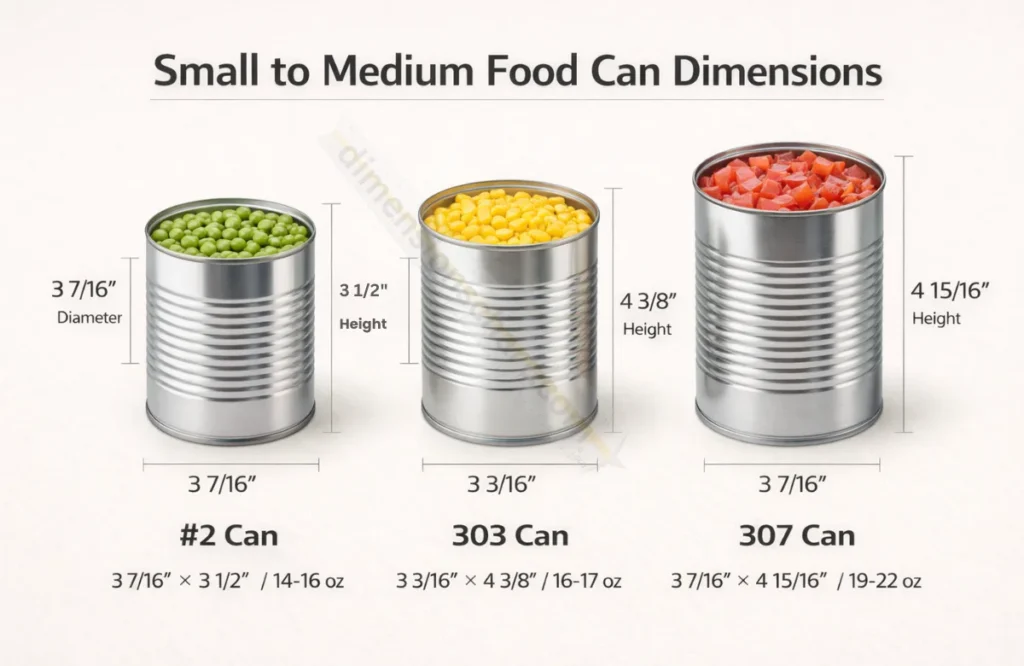
Small food cans ranging from 3 to 17 ounces dominate retail grocery shelves. These household can sizes provide perfect portions for families while minimizing food waste after opening.
The #2 can at 3 7/16″ × 3 1/2″ holds approximately 14-16 ounces and remains the most recognized size in American kitchens. Beans, corn, peas, and diced tomatoes typically come in this format, offering enough for 3-4 servings.
303 cans measure 3 3/16″ diameter and hold exactly 2 cups (16-17 oz). This size perfectly matches many recipe requirements, making conversions easier for home cooks planning meals.
The 307 can dimensions of 3 7/16″ × 4 15/16″ provide 19-22 ounces of capacity. This slightly taller format works well for products like green beans, asparagus, and sliced vegetables that benefit from vertical stacking.
Large and Commercial Food Can Dimensions
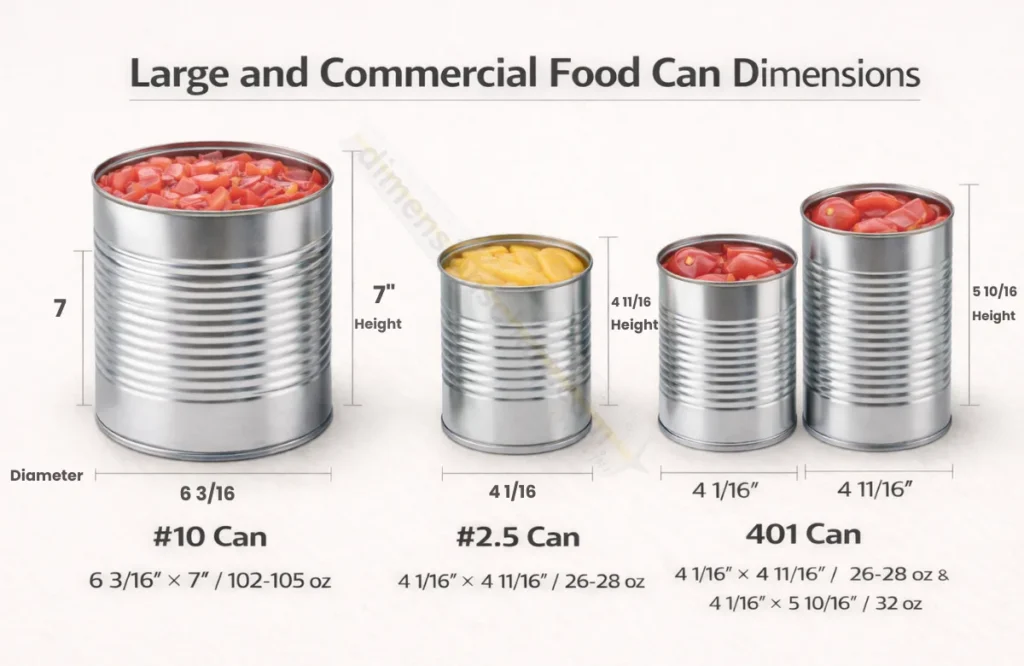
Large food can dimensions serve commercial kitchens, restaurants, and bulk buyers who need volume efficiency. These sizes offer better per-ounce pricing while requiring more storage space.
The #10 can at 6 3/16″ diameter × 7″ height holds 102-105 ounces (roughly 12-13 cups or 6-7 pounds). Foodservice operations rely on this institutional can size for bulk vegetables, fruits, tomatoes, and sauces because it reduces ordering frequency.
#2.5 cans measure 4 1/16″ × 4 11/16″ and hold 26-28 ounces. This size bridges retail and commercial applications, commonly used for sliced fruits, pie fillings, and thick soups that families or small restaurants consume quickly.
The 401 can dimensions of 4 1/16″ diameter appear in both 401×411 (#2.5) and 401×510 formats. The taller 401×510 version holds 32 ounces, ideal for whole tomatoes and large-format sauces requiring extra vertical space.
Two-Piece vs Three-Piece Food Can Construction
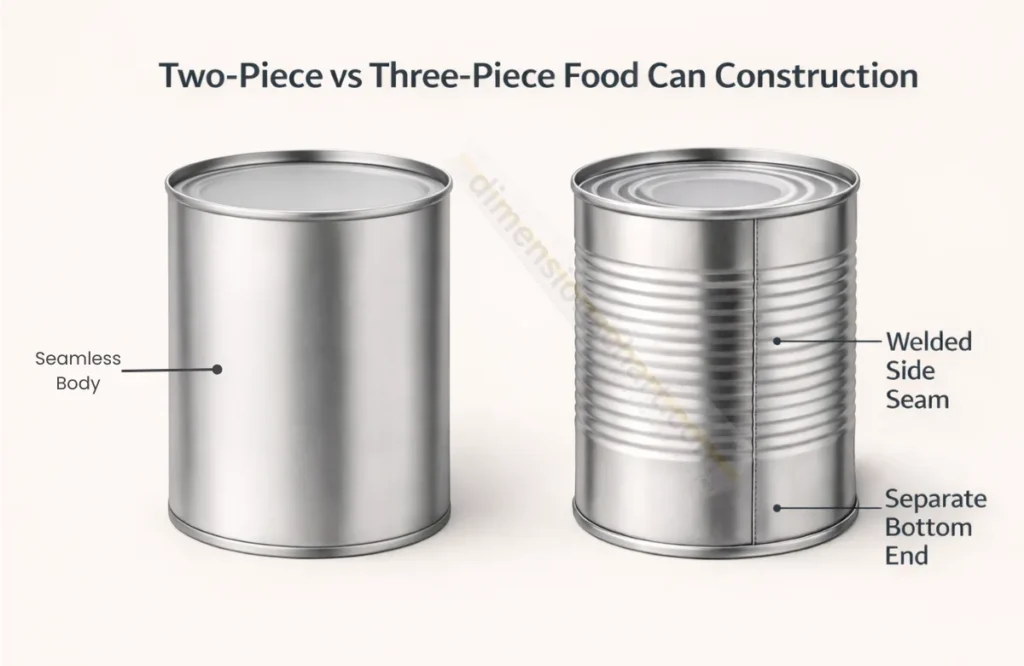
Can construction methods directly impact dimensional accuracy and product compatibility. Two-piece cans form from a single metal sheet drawn into shape with an integral bottom, requiring only a top lid after filling.
Three-piece cans consist of a cylinder body (with welded side seam) plus separate top and bottom ends. Most standard food cans use three-piece construction because it accommodates various diameters and heights more economically.
Two-piece construction provides tighter dimensional tolerances (within 0.5mm) compared to three-piece cans (1-2mm variation). This precision matters for high-speed automated filling lines where exact can diameter ensures proper equipment function.
Material composition also affects measurements—steel cans may have slightly thicker walls than aluminum, impacting internal volume by 1-2%. Modern tin-plated steel cans balance durability with precise dimensional control for food safety and shelf stability.
Conclusion
Food can dimensions chart measurements from 2 11/16″ baby food cans to 6 3/16″ institutional #10 cans provide standardized options for every need. Understanding these specifications helps with storage planning, bulk buying, and recipe conversions.
Whether you’re organizing a pantry or planning commercial kitchen operations, knowing exact can diameter and can height measurements ensures efficient space use and proper equipment compatibility.
FAQs
What are the dimensions of a can of food?
Food can dimensions range from 2 11/16″ × 1 6/16″ (baby food) to 6 3/16″ × 7″ (#10 institutional size). The most common retail size is the #2 can at 3 7/16″ diameter × 3 1/2″ height, holding 14-16 ounces.
What are standard can sizes?
Standard can sizes in the USA include #1 (10-12 oz), #2 (14-16 oz), 303 (16-17 oz), #2.5 (26-28 oz), #3 (46 oz), #5 (56 oz), and #10 (102-105 oz). Each size follows specific diameter and height measurements for manufacturing consistency.
What size is a 2.5 can?
A #2.5 can measures 4 1/16 inches in diameter and 4 11/16 inches in height. It holds 26-28 ounces or approximately 3.25-3.5 cups, commonly used for sliced fruits, pie fillings, and larger vegetable portions.
What size is a 307 can?
A 307 can measures 3 7/16 inches in diameter with varying heights. The most common 307×406 format stands 4 6/16″ tall and holds about 14-16 ounces, similar to a #2 can but with different proportions.
What size is a 401 can?
A 401 can has a diameter of 4 1/16 inches. The 401×411 version (#2.5) is 4 11/16″ tall and holds 26-28 oz, while the 401×510 format stands 5 10/16″ tall and holds 32 oz for larger products.
More Dimensions:

Burhan Ali is the founder and author of DimensionsChart.com, providing accurate size charts, measurements, and guides for smarter buying decisions.