Ordering the wrong aluminum can dimensions leads to production delays and wasted inventory costs. Whether you’re packaging soda, beer, or energy drinks, knowing exact measurements prevents expensive mistakes and ensures compatibility with filling equipment.
This guide provides a complete aluminum can dimensions chart with specifications for every standard size used in the United States. You’ll find height, diameter, volume, and material specifications for making informed packaging decisions.
Standard aluminum cans use AA3004 or AA3104 alloy with wall thickness ranging from 0.09mm to 0.14mm depending on size.The material choice affects durability, weight, and recyclability while maintaining the structural integrity needed for carbonated beverages.
| Can Type | Volume | Height | Diameter | Wall Thickness | Common Use |
|---|---|---|---|---|---|
| Mini | 8 oz (237 mL) | 3.7″ (94 mm) | 2.1″ (53 mm) | 0.09–0.10 mm | Juice, Kids Drinks |
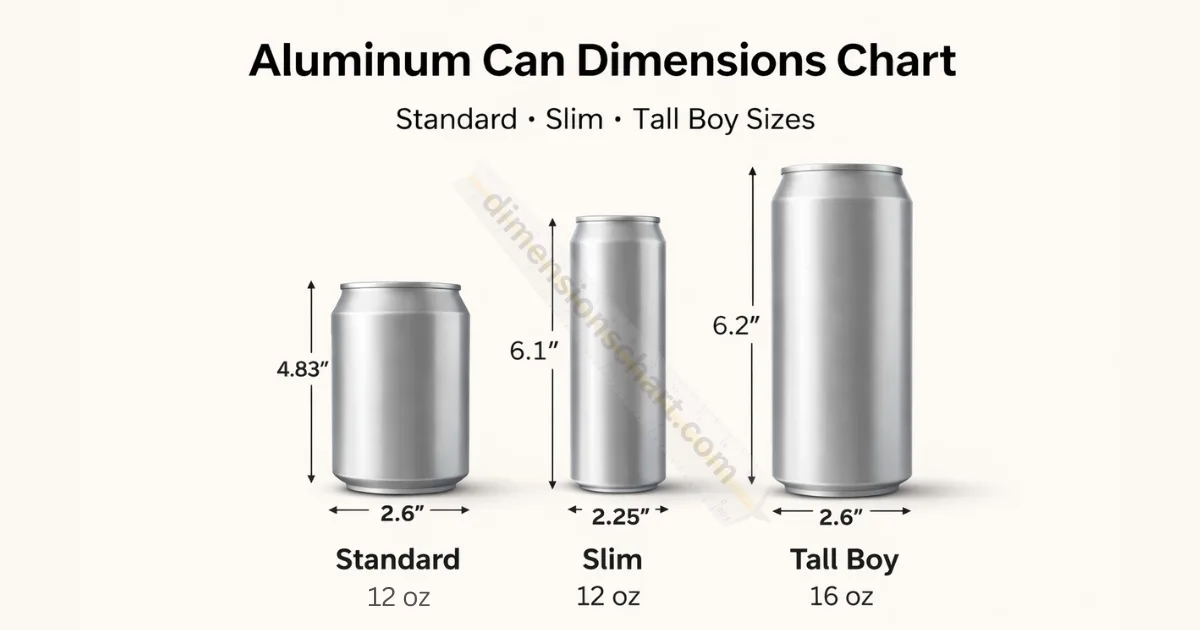
| Standard | 12 oz (355 mL) | 4.83″ (122 mm) | 2.6″ (66 mm) | 0.10–0.12 mm | Soda, Beer, Iced Tea |
| Slim | 12 oz (355 mL) | 6.1″ (156 mm) | 2.25″ (57 mm) | 0.10–0.11 mm | Energy Drinks, Seltzers |
| Tall Boy | 16 oz (473 mL) | 6.2″ (158 mm) | 2.6″ (66 mm) | 0.11–0.13 mm | Craft Beer, Large Format |
| King | 24 oz (710 mL) | 7.5″ (191 mm) | 2.6″ (66 mm) | 0.12–0.14 mm | Premium Singles |
| International 250mL | 8.45 oz (250 mL) | 4.5″ (115 mm) | 2.1″ (53 mm) | 0.09–0.10 mm | Import Beverages |
| International 330mL | 11.2 oz (330 mL) | 5.1″ (130 mm) | 2.6″ (66 mm) | 0.10–0.11 mm | Global Sodas |
| International 375mL | 12.7 oz (375 mL) | 5.5″ (140 mm) | 2.6″ (66 mm) | 0.10–0.12 mm | Craft Beverages |
| International 500mL | 16.9 oz (500 mL) | 6.6″ (168 mm) | 2.6″ (66 mm) | 0.11–0.13 mm | Large Singles |
Standard 12 Oz Aluminum Can Dimensions
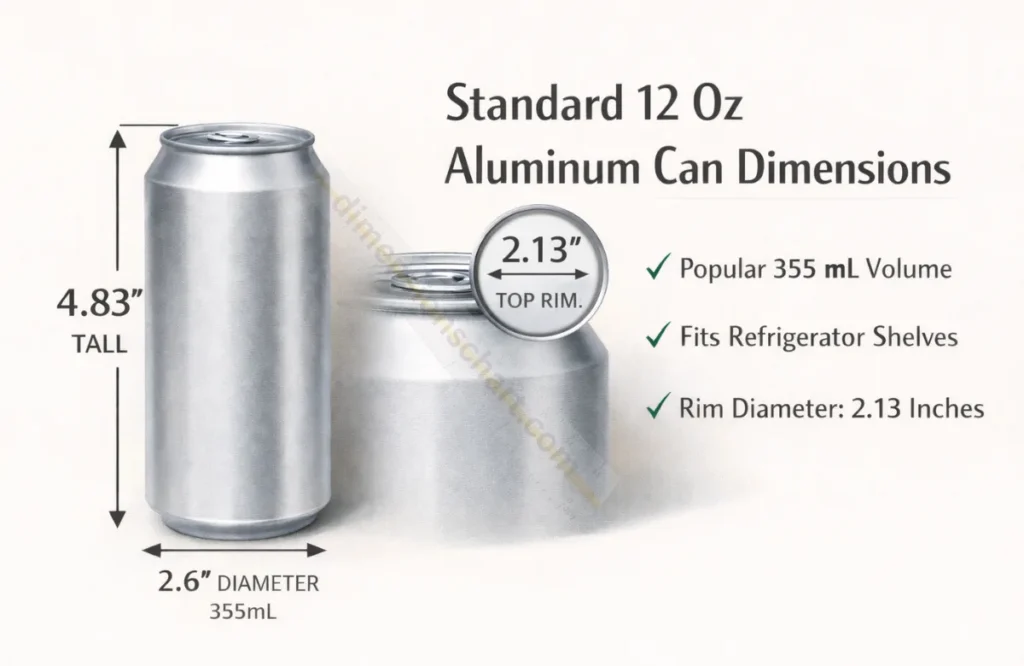
The 12 oz aluminum can represents America’s most popular beverage container size. This standard can measures 4.83 inches tall and 2.6 inches in diameter at the body, with a narrower rim diameter of 2.13 inches where your lips touch during drinking. The volume holds exactly 355 mL of liquid.
Manufacturing tolerances for standard cans allow less than 1mm variation in height and 0.5mm in diameter. These tight specifications ensure compatibility with high-speed filling equipment that processes over 2,000 cans per minute. The 211 diameter code (2 11/16 inches) has become the universal standard recognized worldwide.
Standard vs Sleek vs Slim Can Comparison
Standard cans use the traditional 4.83-inch height that fits comfortably in most refrigerator shelves and cup holders. This aluminum can format maximizes packing efficiency with 24 cans per case fitting perfectly into standard shipping boxes. Major brands like Coca-Cola, Pepsi, and Budweiser built their distribution networks around these dimensions.
Sleek and slim cans offer taller profiles that create premium shelf appeal. The sleek can stands 6.1 inches tall with a 2.25-inch diameter, holding the same 12 oz volume in a more sophisticated silhouette. Energy drink brands pioneered this format, and it now captures over 30% of the beverage can market according to 2025 industry data.
Specialty Aluminum Can Sizes Chart
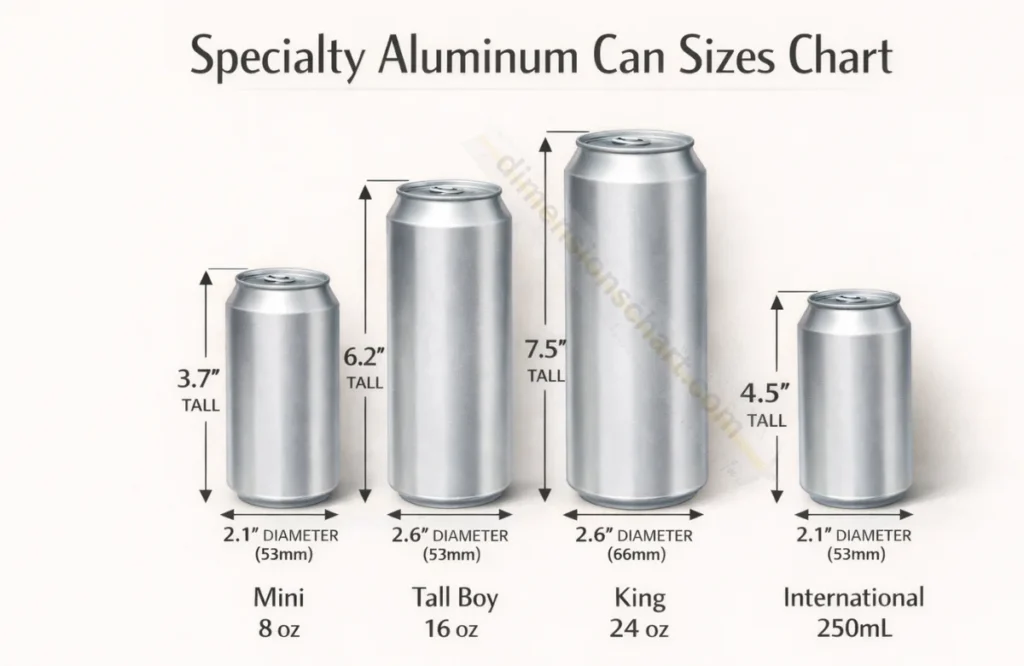
Mini 8 oz cans measure 3.7 inches tall and 2.1 inches in diameter, serving the growing demand for portion control. These smaller aluminum can dimensions appeal to health-conscious consumers and parents buying drinks for children. Vending machines increasingly stock this size alongside standard options.
Tall boy 16 oz cans extend to 6.2 inches in height while maintaining the familiar 2.6-inch diameter. Craft breweries favor this can size for single-serve offerings that justify premium pricing. The larger volume provides 33% more beverage than standard 12 oz cans while using only 25% more aluminum.
Large format 24 oz cans tower at 7.5 inches tall, delivering value-conscious consumers maximum volume in a single container. These king cans dominate the convenience store market for energy drinks and malt beverages. The increased can height creates impressive shelf presence that attracts attention.
International 250 mL cans measure 4.5 inches tall with a 2.1-inch diameter, representing the most common size in European and Asian markets. The 330 mL format stands 5.1 inches tall at 2.6 inches diameter, matching the global standard for imported sodas. 375 mL cans reach 5.5 inches in height, while 500 mL cans stretch to 6.6 inches tall.
Aluminum Can Diameter & Height Specifications
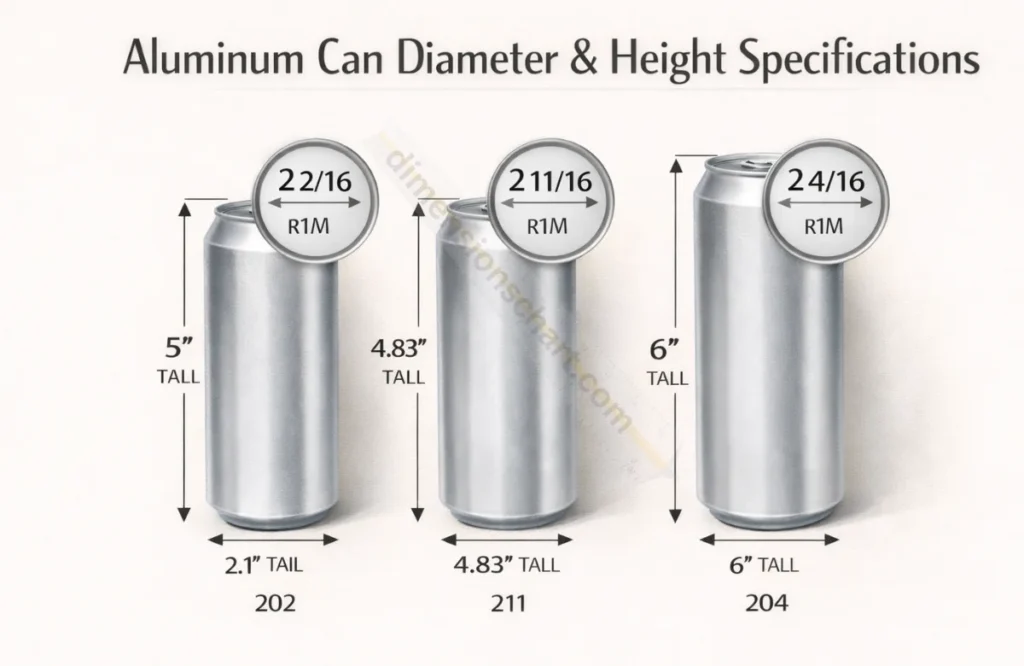
Can diameter follows industry coding systems where 211 means 2 11/16 inches, 202 equals 2 2/16 inches, and 204 represents 2 4/16 inches. These codes appear on manufacturing specifications and equipment settings. The body diameter measures the widest point of the can, while rim diameter indicates the drinking opening.
Height measurements include the entire can from bottom seam to top seam. The double seam at both ends adds approximately 3-4mm to the overall height beyond the straight body section. Quality control systems monitor these specifications continuously during production runs to maintain consistency.
The relationship between diameter and height affects both stability and perception. Wider cans provide better balance but consume more shelf space. Taller cans appear more premium but may tip easier. According to beverage packaging research, the ideal height-to-diameter ratio falls between 1.8:1 and 2.7:1 for optimal consumer handling.
Choosing Aluminum Can Dimensions
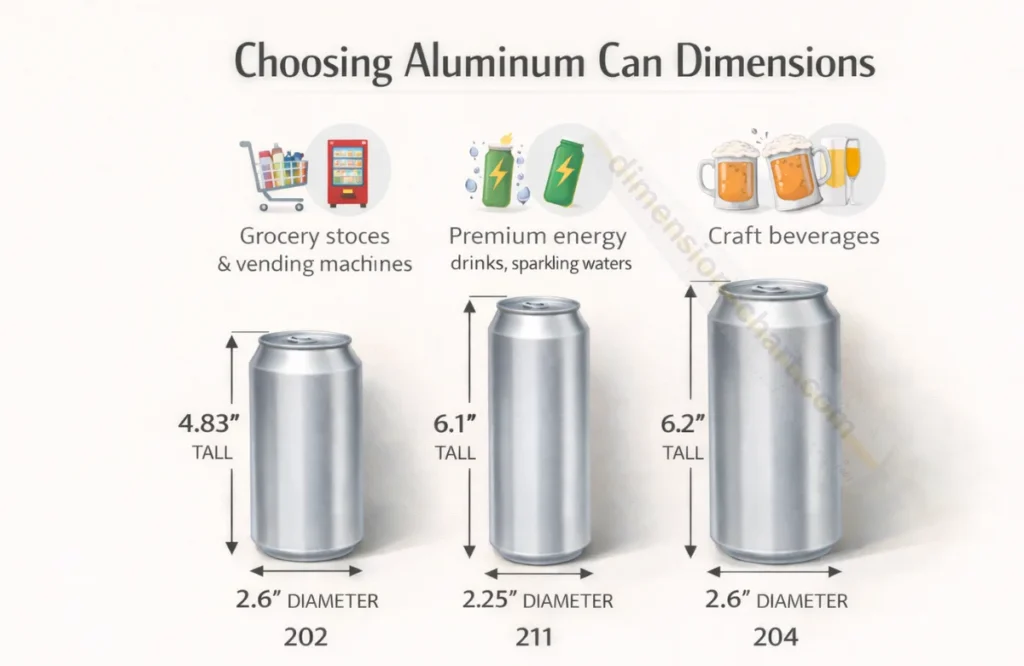
Measure your target market before selecting can dimensions. Standard 12 oz cans work for mainstream sodas and beers sold through grocery stores and vending machines. Slim cans appeal to premium energy drinks and sparkling waters targeting younger demographics. Tall boys suit craft beverages where higher price points justify larger servings.
Vending machine compatibility requires standard dimensions of 2.6-inch diameter and heights under 6 inches. Cup holder fit limits diameter to 2.75 inches maximum for automotive applications. Shelf space efficiency improves with shorter, wider cans that stack securely without tipping.
Common sizing mistakes include choosing oversized cans that don’t fit standard retail fixtures or selecting specialty dimensions that require custom packaging materials. The most cost-effective approach uses standard 12 oz or 16 oz formats with proven supply chains and readily available filling equipment.
Conclusion
Aluminum can dimensions follow standardized measurements that balance functionality, cost, and consumer preferences. The standard 12 oz can at 4.83 inches tall and 2.6 inches diameter remains America’s beverage packaging backbone. Use this aluminum can dimensions chart as your reference guide for selecting the right size for your product, market, and distribution channels.
FAQs
What are the dimensions of a standard aluminum can?
A standard 12 oz aluminum can measures 4.83 inches (122 mm) tall and 2.6 inches (66 mm) in diameter. The rim narrows to 2.13 inches at the drinking opening. This size holds 355 mL and represents over 60% of all beverage cans sold in the United States.
How big is a 250 mL can?
A 250 mL aluminum can measures 4.5 inches (115 mm) tall and 2.1 inches (53 mm) in diameter. This international size holds 8.45 oz and commonly packages energy drinks and imported beverages. The slim profile provides comfortable single-hand grip while maximizing shelf presence.
What are the dimensions of a 330ml can?
A 330 mL can stands 5.1 inches (130 mm) tall with a 2.6 inch (66 mm) diameter. This size holds 11.2 oz and serves as the global standard for many international soda brands. The dimensions match standard filling equipment used worldwide for efficient production.
What are the dimensions of a 375ml can?
A 375 mL aluminum can measures 5.5 inches (140 mm) in height and 2.6 inches (66 mm) in diameter. This size contains 12.7 oz and bridges the gap between standard 12 oz and 16 oz formats. Craft beverage producers favor this volume for premium single-serve offerings.
How big is a 500 mL can?
A 500 mL can measures 6.6 inches (168 mm) tall and 2.6 inches (66 mm) in diameter. This size holds 16.9 oz and provides excellent value for single-serve purchases. European markets use this format extensively for beer and energy drinks sold at convenience stores.
What’s bigger, 375ml or 750ml?
750 mL is exactly double the size of 375 mL, holding 25.4 oz compared to 12.7 oz. A 750 mL can typically measures 9-10 inches tall, while 375 mL stands around 5.5 inches. The 750 mL format rarely appears in aluminum cans, more commonly used for glass wine bottles.
More Dimensions: Can Koozie Dimensions Chart

Burhan Ali is the founder and author of DimensionsChart.com, providing accurate size charts, measurements, and guides for smarter buying decisions.