The beverage can dimensions you choose directly impact your product’s shelf presence, shipping costs, and brand positioning. Whether you’re launching an energy drink or a craft beer, understanding standard can sizes isn’t optional—it’s essential for success in the competitive US beverage market.
This guide breaks down every major can format, from mini cans to crowlers, with exact measurements and practical business insights you need.
Standard Beverage Can Dimensions in the US Market
Every beverage can has three critical measurements that determine compatibility and performance. The diameter measures across the widest part of the can body. The height runs from bottom to top seam. The can end size determines which lids fit your cans.
The actual liquid volume differs from can size because of headspace requirements. A 12 oz can holds exactly 355ml of beverage, but the internal volume is slightly larger to prevent overfilling during production.
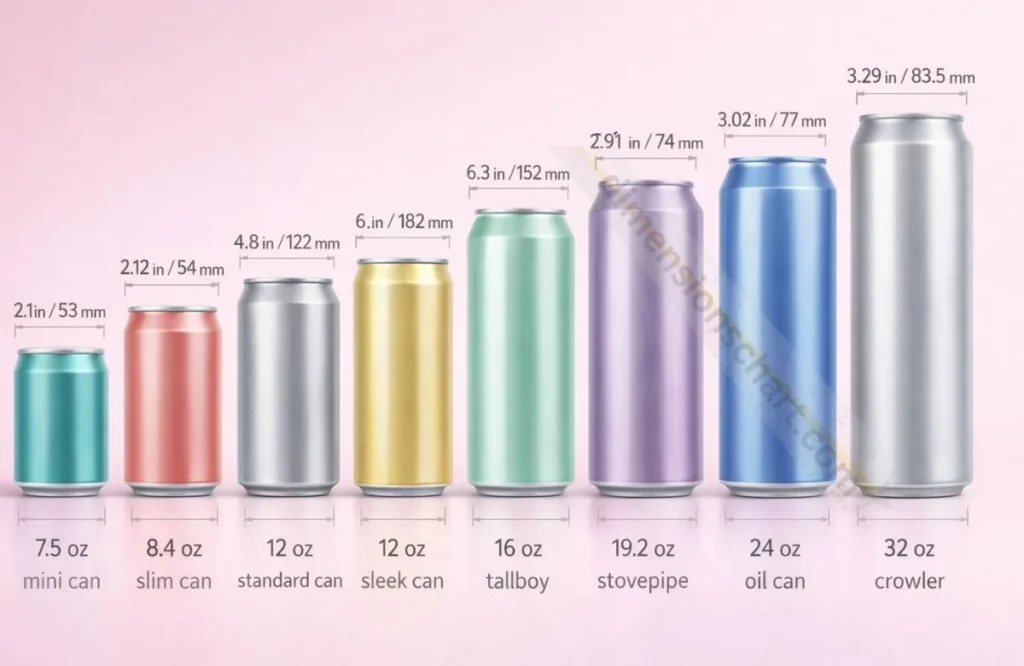
| Can Size | Diameter | Height | Can End Size | Volume | Units/Pallet | Primary Applications | Market Positioning |
|---|---|---|---|---|---|---|---|
| 7.5 oz Mini | 2.13″ (54mm) | 3.62″ (92mm) | 202 (52mm) | 222ml | 12,960 | Kids drinks, portion control, airlines, vending | Health-conscious, calorie reduction, premium $/oz |
| 8.4 oz Slim/Energy | 2.09″ (53mm) | 5.28″ (134mm) | 200 (50mm) | 250ml | 10,166 | Energy drinks, cold brew, functional beverages | Premium, urban, on-the-go |
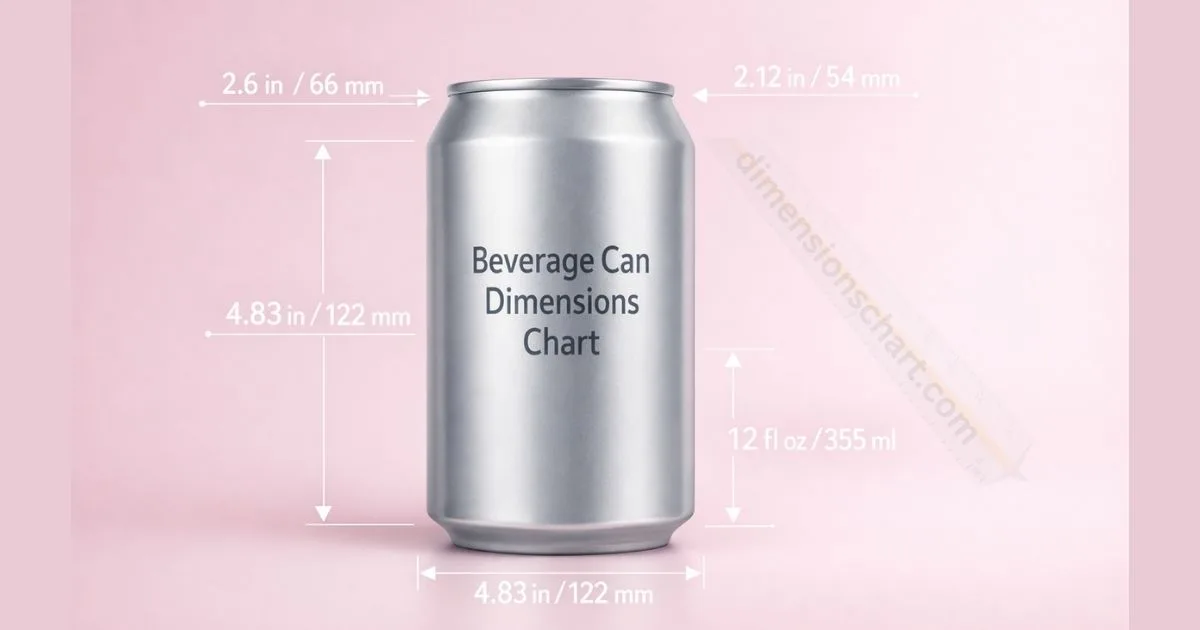
| 12 oz Standard | 2.60″ (66mm) | 4.83″ (123mm) | 202 (52mm) | 355ml | 9,720 | Sodas, mainstream beer, sparkling water, iced tea | Industry standard, cost-effective |
| 12 oz Sleek | 2.24″ (57mm) | 6.12″ (155mm) | 202 (52mm) | 355ml | 10,120 | Hard seltzers, kombucha, premium RTD, organic | Modern, health-focused, shelf standout |
| 16 oz Tallboy | 2.60″ (66mm) | 6.19″ (157mm) | 202 (52mm) | 473ml | 7,776 | Craft beer, IPAs, premium beverages | Craft positioning, more label space |
| 19.2 oz Stovepipe | 2.60″ (66mm) | 7.50″ (190mm) | 202 (52mm) | 568ml | 6,480 | Mainstream beer, C-store singles, value | Value, better than 16oz |
| 24 oz Oil Can | 2.60″ (66mm) | 9.00″ (229mm) | 202 (52mm) | 710ml | 6,480 | Value beer, high-volume, warehouse | Max value, cost/oz leader |
| 32 oz Crowler | 2.87″ (73mm) | 8.25″ (210mm) | 209 (65mm) | 946ml | 4,320 | Draft beer to-go, taproom, limited releases | Specialty / Fresh |
Most Common Beverage Can Sizes and Their Exact Dimensions
7.5 oz Mini Can
The mini can format measures 2.13 inches (54mm) in diameter and 3.62 inches (92mm) in height. It uses a standard 202 can end (52mm), making it compatible with most filling lines. This size dominates the portion control segment and appears in school vending machines, airlines, and health-focused product lines.
Brands use this format to reduce calorie perception while maintaining premium pricing per ounce. The smaller footprint also improves cooler efficiency in retail environments.
8.4 oz Slim/Energy Can
This iconic format measures 2.09 inches (53mm) across and 5.28 inches (134mm) tall. It requires a 200 can end (50mm), which is less common in North America. Red Bull made this energy drink can size famous, and it now signals “functional beverage” to consumers.
The tall, narrow profile creates strong shelf visibility and fits easily in cup holders. However, the specialized end size increases minimum order quantities and limits supplier options.
12 oz Standard Can
The workhorse of the industry measures 2.60 inches (66mm) in diameter and 4.83 inches (123mm) in height. This standard beverage can uses a 202 end and represents over 60% of the US canned beverage market.
Production lines are optimized for this format. Equipment compatibility is universal, and packaging materials like cartons and trays are readily available at competitive prices. If you’re unsure which size to choose, this is the safe bet.
12 oz Sleek Can
The sleek can holds the same volume as a standard 12 oz but measures 2.24 inches (57mm) in diameter and 6.12 inches (155mm) tall. It uses the standard 202 can end, making it easier to source than true slim cans.
Hard seltzer brands pioneered this format to signal “lighter” and “healthier” positioning. The increased height provides 40% more label surface area than standard cans, creating better storytelling opportunities on crowded shelves.
16 oz Tallboy/Pint Can
Craft brewers favor this format: 2.60 inches (66mm) diameter and 6.19 inches (157mm) height with a 202 end. The 16 oz can delivers a near-pint serving that appeals to serious beer drinkers.
The extra height provides premium label space for detailed artwork and brand storytelling. Most canning lines handle this size with minimal adjustment from 12 oz operations.
19.2 oz Stovepipe Can
This format measures 2.60 inches (66mm) across and 7.50 inches (190mm) tall. It uses standard 202 ends and fills the gap between 16 oz and 24 oz sizes. Major brewers created this convenience store favorite to maximize single-serve occasions.
The stovepipe can offers better value perception than 16 oz without the bulk of 24 oz formats. It’s become the fastest-growing size in gas stations and quick-service retail.
24 oz Oil Can
The large format can measures 2.60 inches (66mm) in diameter and 9.00 inches (229mm) in height. It uses 202 ends but requires careful handling during production due to its height-to-diameter ratio.
This size dominates value-oriented beer sales in supermarkets and warehouse clubs. The tall profile can create shelf space challenges, but it delivers strong economics for high-volume products.
32 oz Crowler
The crowler format measures 2.87 inches (73mm) across and 8.25 inches (210mm) tall with a 209 end (65mm). Breweries seal these on-site to package draft beer for takeaway.
This larger can end size requires dedicated seaming equipment. The format combines the portability of cans with the volume of a small growler, perfect for craft beer limited releases.
Beverage Can End Dimensions and Compatibility
Understanding Can End Sizes
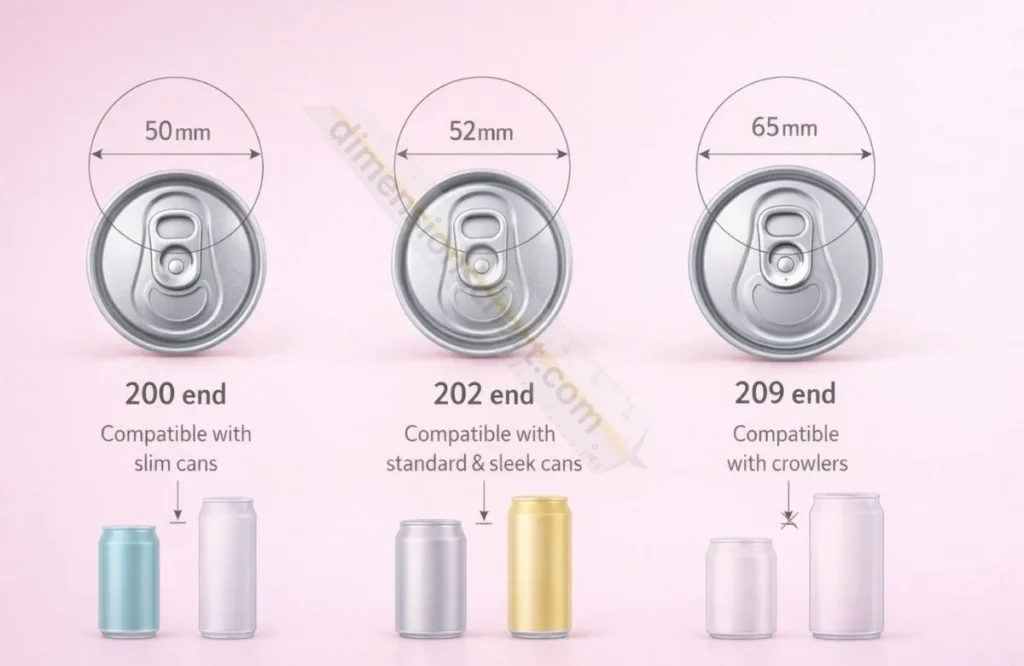
Can ends come in standardized diameters that must match your can body exactly. The 200 end (50mm/1.97 inch) fits only slim 53mm diameter cans. It’s common in Europe and Asia but represents less than 5% of North American production.
The 202 end (52mm/2.05 inch) dominates the US market. It seals standard 66mm and sleek 57mm diameter cans. Over 90% of American beverage canning operations use 202 tooling, making it the most cost-effective choice.
209 ends (65mm/2.56 inch) handle large format 73mm diameter crowlers and some specialty packaging. These require dedicated seaming heads and higher minimum order quantities—typically 100,000+ ends versus 50,000+ for 202 formats.
B64 versus CDL represents the two main end constructions. B64 ends use pull-tab opening mechanisms and suit cold-filled products. CDL (Can Dynamics Lever) ends cost 2-3 cents less but only work with certain product types and filling methods.
Matching Can Bodies to Can Ends
Seaming compatibility is non-negotiable. A 202 end will not seal on a 200-diameter can body, no matter how you adjust the equipment. This mismatch causes 100% failure rates and wasted product.
Common mistakes happen during format transitions. Brands switching from standard to sleek cans keep using their existing 202 ends—this works because both formats share the same end size. But switching to true slim cans requires new 200 ends and complete seaming line reconfiguration.
Production changeovers between end sizes take 2-4 hours and require skilled technicians. Most co-packers charge premium rates or refuse mixed runs below 50,000-unit minimums to avoid this downtime.
Industry standardization around 202 ends saves American beverage companies an estimated $400 million annually in tooling and inventory costs, according to the Can Manufacturers Institute.
Choosing the Right Beverage Can Dimensions for Your Product
Product Category Considerations
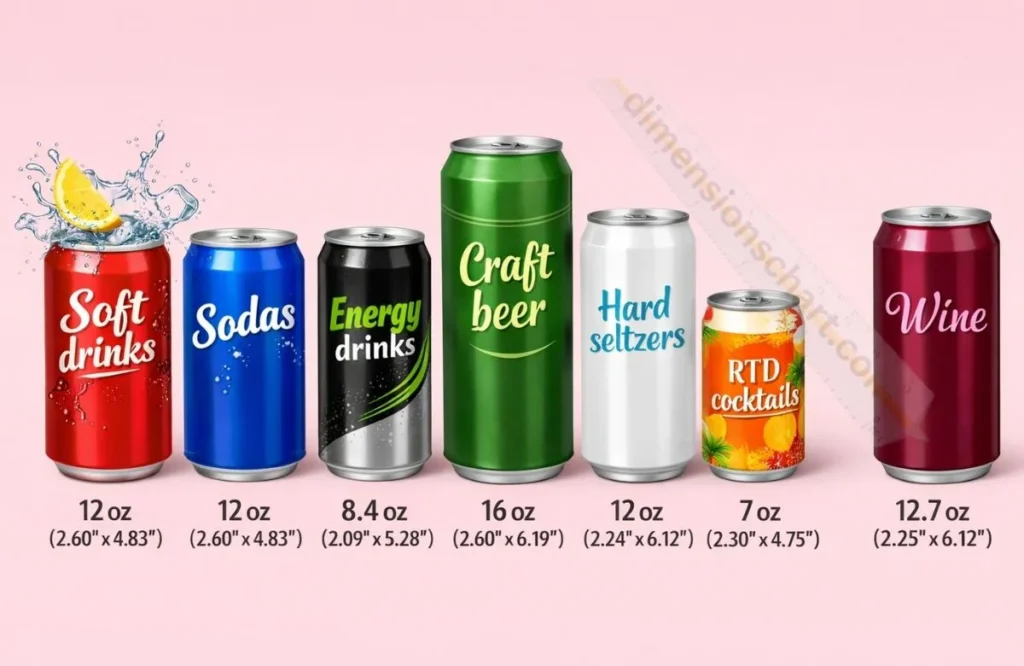
Soft drinks and sodas stick with standard 12 oz cans (2.60″ × 4.83″) because consumers expect this format. Coca-Cola and PepsiCo established this as the norm, and deviation signals “different”—which works for craft brands but risks alienating mainstream buyers.
Energy drinks built their identity around 8.4 oz slim cans (2.09″ × 5.28″). The format conveys “concentrated power” and fits the grab-and-go lifestyle. Monster’s 16 oz cans broke this mold deliberately to position as “more energy,” showing how dimensional choice communicates brand values.
Craft beer gravitates toward 16 oz tallboys (2.60″ × 6.19″) because the format provides pint-like volume and ample label space for artwork. According to Brewers Association data, 68% of craft breweries use 16 oz as their primary format for retail distribution.
Hard seltzers adopted sleek 12 oz cans (2.24″ × 6.12″) to differentiate from beer and signal “lighter” positioning. The format’s success drove category growth from $500 million in 2018 to $4.5 billion in 2020, per IWSR beverage market analysis.
RTD cocktails and wine use varied formats based on alcohol content and serving size. High-ABV cocktails favor 200ml to 250ml cans (roughly 7-8 oz) for portion control, while wine typically uses 375ml (12.7 oz) to deliver half-bottle servings.
Functional beverages like CBD drinks, adaptogen waters, and nootropic blends choose smaller formats (8-10 oz) to manage dosing perception and justify premium pricing. The compact size signals “concentrated benefits” rather than “thirst quencher.”
Brand Positioning Through Dimensional Choice
Premium perception links to unconventional sizing. A 7.5 oz can at $2.49 commands higher per-ounce pricing than a 12 oz can at $2.99, yet consumers perceive both as similarly priced. This psychological pricing effect works because shoppers focus on absolute price, not unit economics.
Value positioning demands larger formats. A 24 oz can priced at $1.99 delivers better perceived value than a 12 oz can at $1.29, even though the per-ounce cost is identical. Warehouse clubs like Costco push brands toward these bulk formats to reinforce their value proposition.
Health-conscious sizing uses smaller cans to support moderation messaging. Brands concerned about sugar content or calorie counts increasingly offer 7.5 oz formats. Coca-Cola reported that mini cans grew 30% annually from 2015-2020 as health trends intensified.
Stand-out shelf presence requires dimensional differentiation in crowded categories. When Bai Brands launched in mainstream retail, they chose sleek cans to separate from traditional teas and juices. The distinct profile contributed to their acquisition by Dr Pepper for $1.7 billion in 2016.
Conclusion
Beverage can dimensions affect everything from production costs to consumer perception. Standard 12 oz cans offer universal compatibility and cost efficiency. Sleek and slim formats create differentiation but require specialized equipment. Larger formats deliver value positioning, while mini cans enable premium pricing strategies.
FAQ’s
What are the dimensions of a drinks can?
The most common drinks can in the United States is the standard 12 oz format. It measures 2.60 inches (66mm) in diameter and 4.83 inches (123mm) in height. This size uses a 202 can end (52mm diameter). You’ll find this format in sodas, beers, seltzers, and most mainstream beverages.
What are the dimensions of a 12 oz soda can?
A 12 oz soda can measures exactly 2.60 inches (66mm) in diameter and 4.83 inches (123mm) in height. The can end is 2.05 inches (52mm), known as a 202 end. These specifications are standardized across major brands like Coca-Cola, Pepsi, and Dr Pepper.
What are the dimensions of a 16 oz can?
The 16 oz can measures 2.60 inches (66mm) in diameter and 6.19 inches (157mm) in height. It uses the standard 202 can end (52mm), making it compatible with most production lines. This tallboy format provides nearly a full pint of beverage and is especially popular in craft beer.
What are the dimensions of a 7.5 oz soda can?
The 7.5 oz soda can is a mini format measuring 2.13 inches (54mm) in diameter and 3.62 inches (92mm) in height. It uses a 202 can end (52mm), the same as standard cans. This smaller size is popular for portion control, kids’ drinks, and health-conscious consumers.
What is the standard size of cans?
The standard can size in the United States is 12 oz (355ml). It measures 2.60 inches (66mm) in diameter, 4.83 inches (123mm) in height, and uses a 202 end (52mm). This format accounts for approximately 60-65% of all canned beverages sold in America. The 12 oz standard emerged in the 1960s and became universal across sodas, beers, and other drinks.

Burhan Ali is the founder and author of DimensionsChart.com, providing accurate size charts, measurements, and guides for smarter buying decisions.