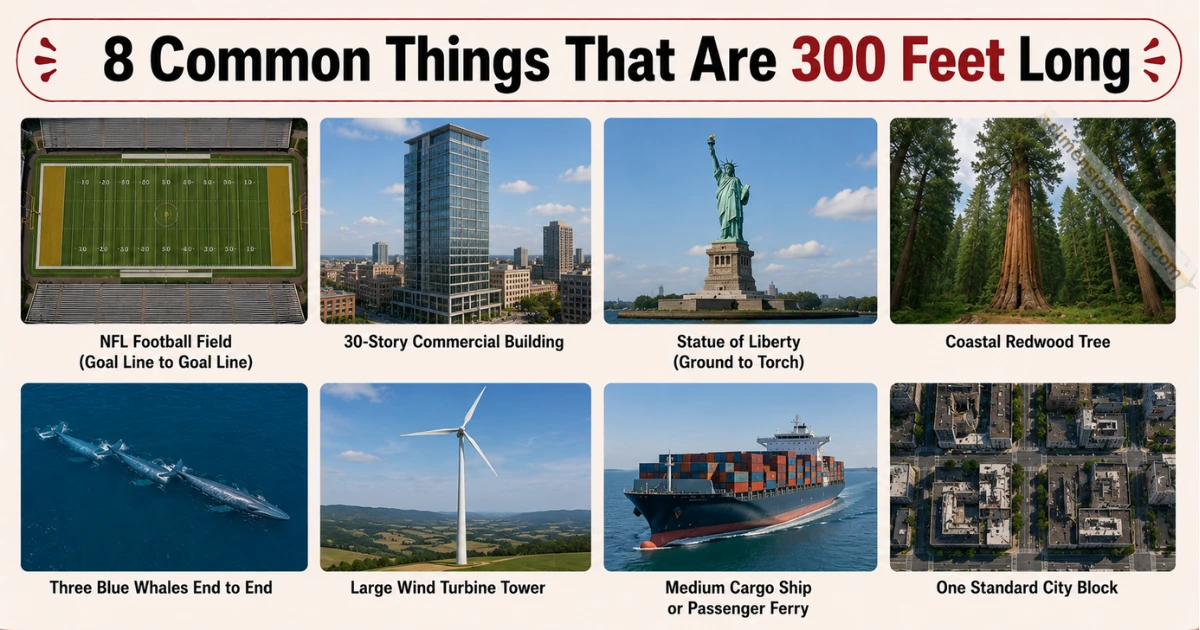
300 feet equals 91.44 meters, 100 yards and 3,600 inches.
Three hundred feet is one of those measurements that sounds familiar but feels impossible to picture without the right reference. This guide covers 8 real-world objects, structures, and natural wonders that measure exactly or approximately 300 feet long or tall. From NFL football fields to coastal redwood trees, every example here gives you an instant, reliable mental image for this impressive distance.
How Long Is 300 Feet?
| Unit | 300 Feet Equals |
|---|---|
| Inches | 3,600 in |
| Yards | 100 yd |
| Meters | 91.44 m |
| Centimeters | 9,144 cm |
| Kilometers | 0.091 km |
| Miles | 0.0568 mi |
8 Things That Are 300 Feet Long — Quick Reference List
Here is a complete overview of every 300-foot example covered in this article, organized by number, item, and category.
| # | Item | Category |
|---|---|---|
| 1 | NFL Football Field (Goal Line to Goal Line) | Sports & Recreation |
| 2 | 30-Story Commercial Building | Buildings & Landmarks |
| 3 | Statue of Liberty (Ground to Torch) | Buildings & Landmarks |
| 4 | Coastal Redwood Tree | Nature & Wildlife |
| 5 | Three Blue Whales End to End | Nature & Wildlife |
| 6 | Large Wind Turbine Tower | Engineering & Infrastructure |
| 7 | Medium Cargo Ship or Passenger Ferry | Engineering & Infrastructure |
| 8 | One Standard City Block | Urban Planning |
Sports & Recreation — 300 Feet on the Playing Field
The most familiar 300-foot reference for most Americans lives right on the sports field, visible every single weekend of the football season.
NFL Football Field (Goal Line to Goal Line)
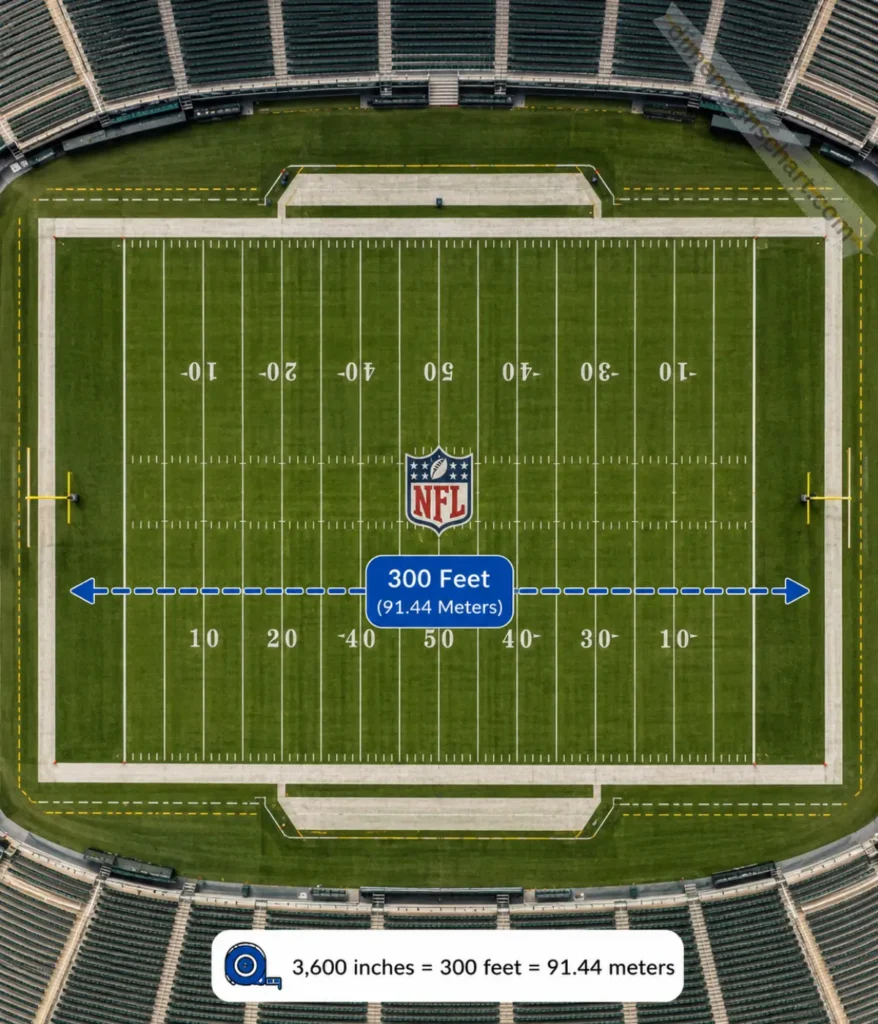
An NFL regulation football field measures exactly 300 feet from goal line to goal line, equal to 100 yards, used across every NFL, NCAA, and high school football program in the United States.
Every American who has watched or attended a football game already carries a perfect 300-foot mental reference they can recall instantly without any measuring tools at all.
👉 Check it out: 14 Common Things That Are 30 Feet Long 2026
Buildings & Landmarks — 300 Feet Reaching Into the Sky
Some of America’s most iconic structures rise to exactly or nearly 300 feet above street level, giving every city resident a permanent vertical reference point.
30-Story Commercial Building
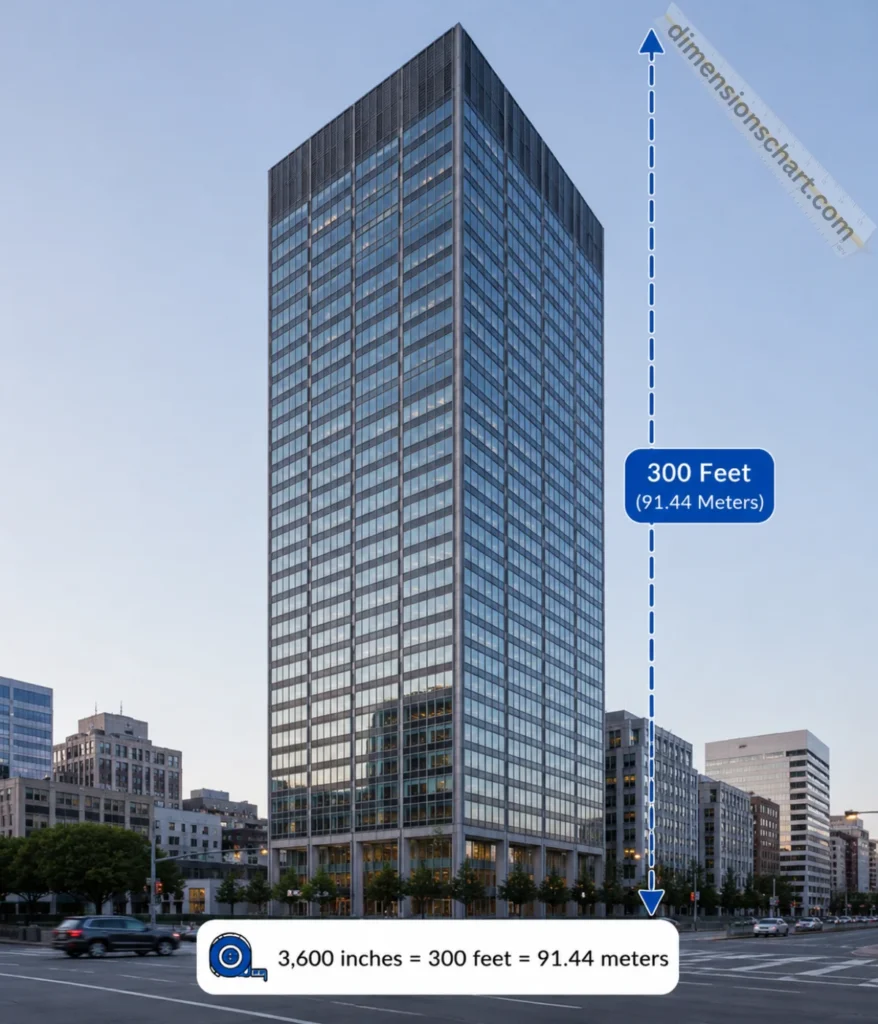
A standard 30-story American commercial building stands approximately 300 feet tall, based on the typical 10-foot floor-to-floor height used across U.S. high-rise construction nationwide.
Real 300-foot-class buildings like One Financial Center in Boston and the Carew Tower in Cincinnati define downtown skylines and give residents a familiar vertical 300-foot reference visible from miles away.
Statue of Liberty (Ground to Torch)
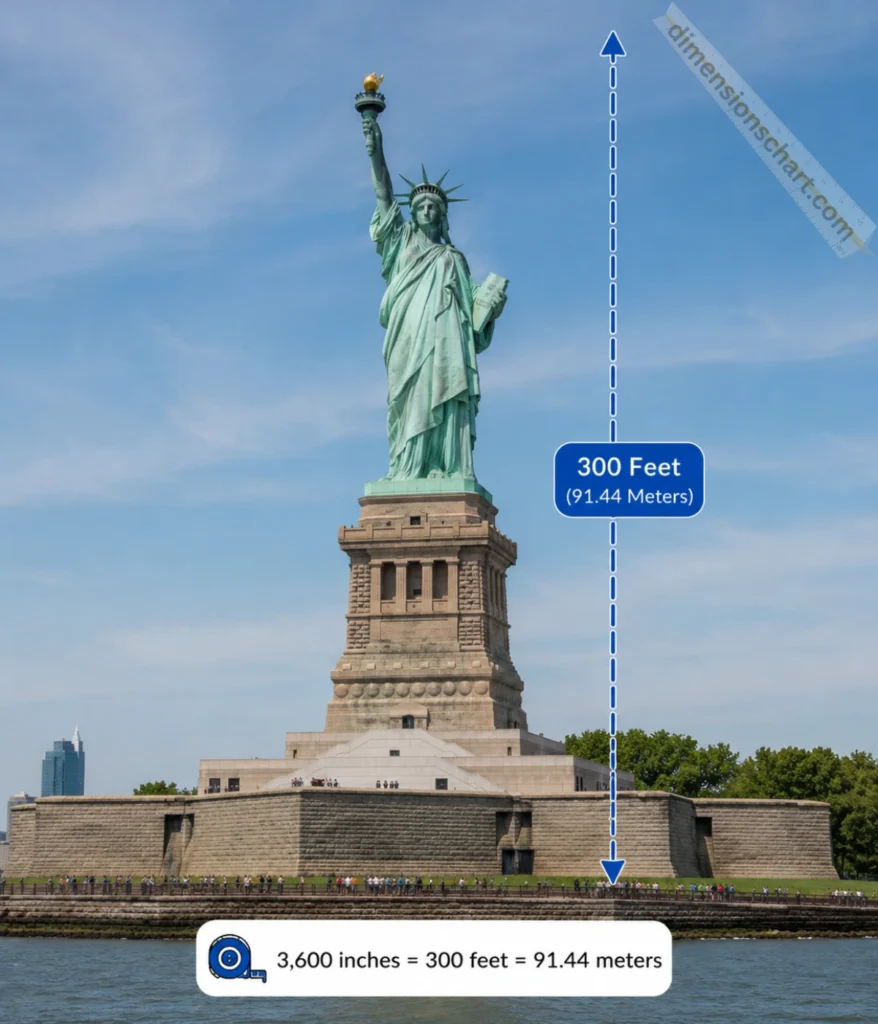
The Statue of Liberty measures 305 feet from ground level to the tip of her torch, placing her just over the 300-foot mark and making her one of the most iconic vertical landmarks in all of American history.
Lady Liberty’s index finger alone measures nearly 8 feet long, and her full 305-foot height — pedestal plus statue — makes her the most recognized 300-foot-class structure visited by millions annually.
Nature & Wildlife — 300 Feet in the Natural World
Nature produces some of the most breathtaking examples of 300-foot scale found anywhere on Earth, from towering forest giants to the ocean’s largest creatures.
Coastal Redwood Tree
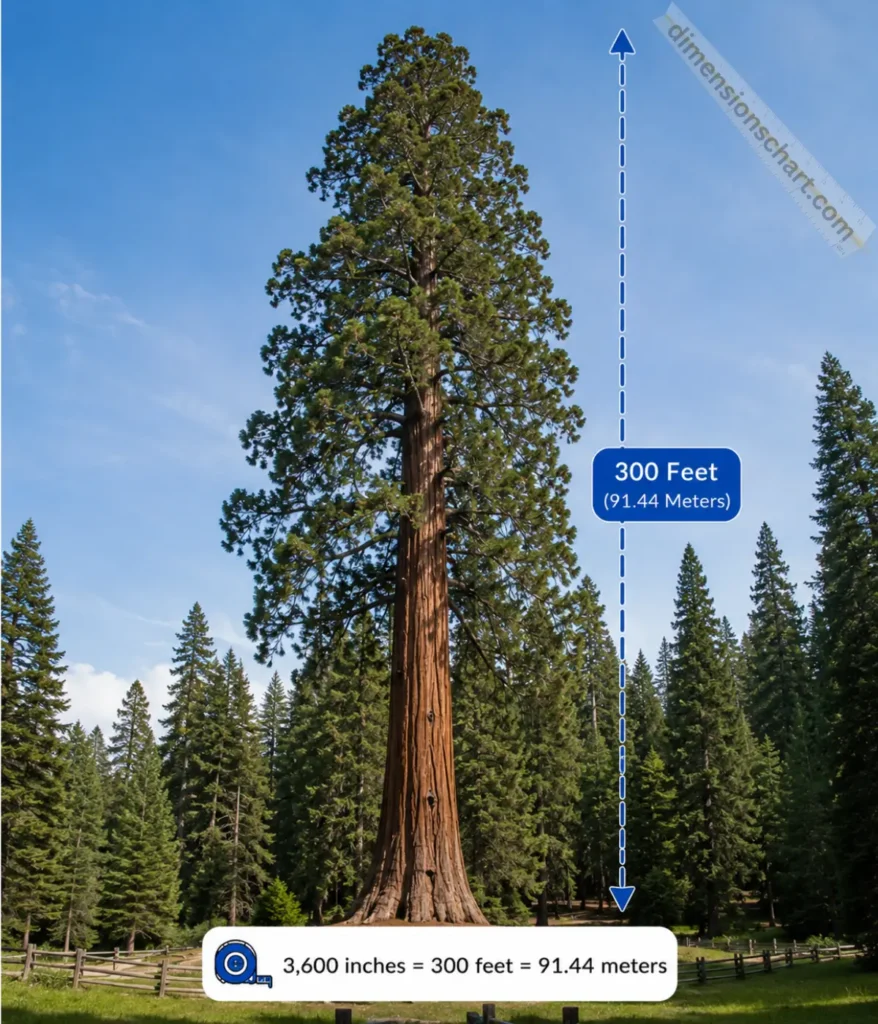
A mature coastal redwood regularly reaches 300 feet in height across the old-growth forests of Northern California, making it the tallest tree species on Earth and the most awe-inspiring living 300-foot reference in the United States.
Redwood National and State Parks protect entire groves of 300-foot coastal redwoods, including the famous Hyperion tree, recognized by the U.S. Forest Service as the tallest known living tree on Earth at 380 feet.
Three Blue Whales End to End
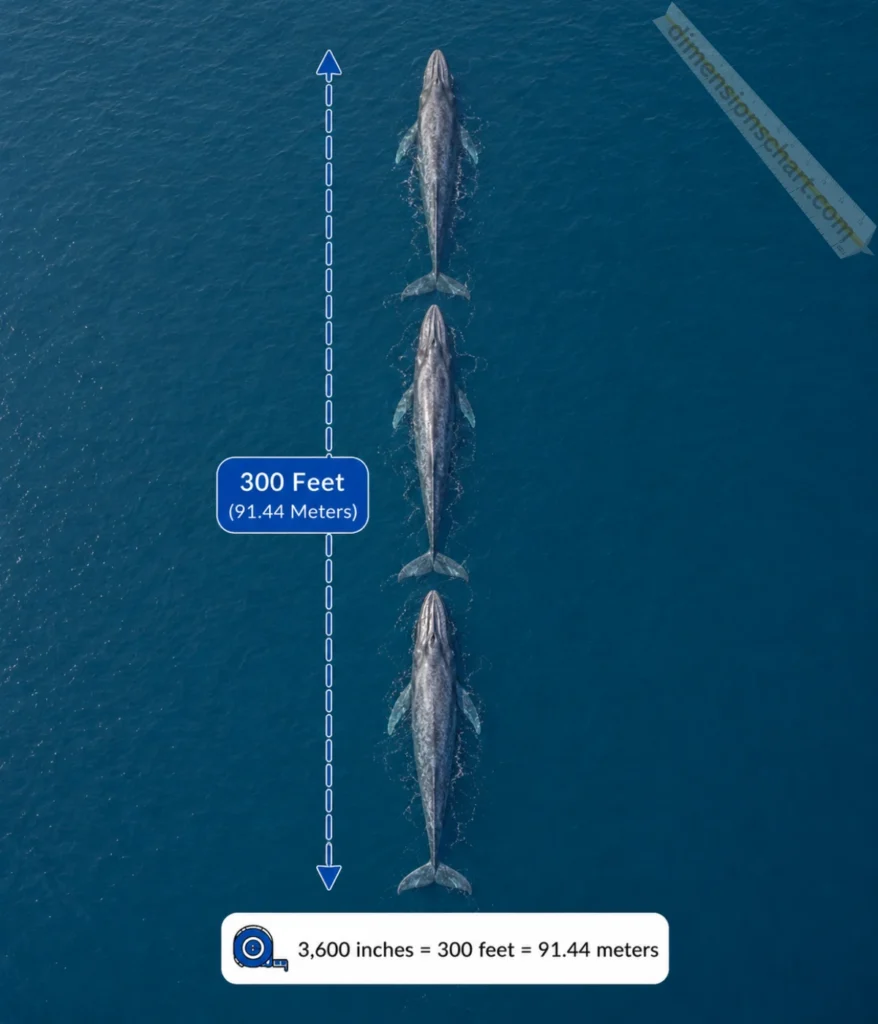
A fully grown blue whale reaches approximately 100 feet in body length, meaning three blue whales placed head to tail span almost exactly 300 feet of continuous length.
NOAA’s National Marine Fisheries Service documents blue whale populations in U.S. Pacific and Atlantic waters, and life-size models at the Smithsonian National Museum of Natural History let visitors experience the 100-foot scale that multiplied by three reaches the full 300-foot benchmark.
Engineering & Infrastructure — 300 Feet Built for Function
Modern American engineering regularly hits the 300-foot mark in structures designed to power, transport, and connect communities across the country.
Large Wind Turbine Tower
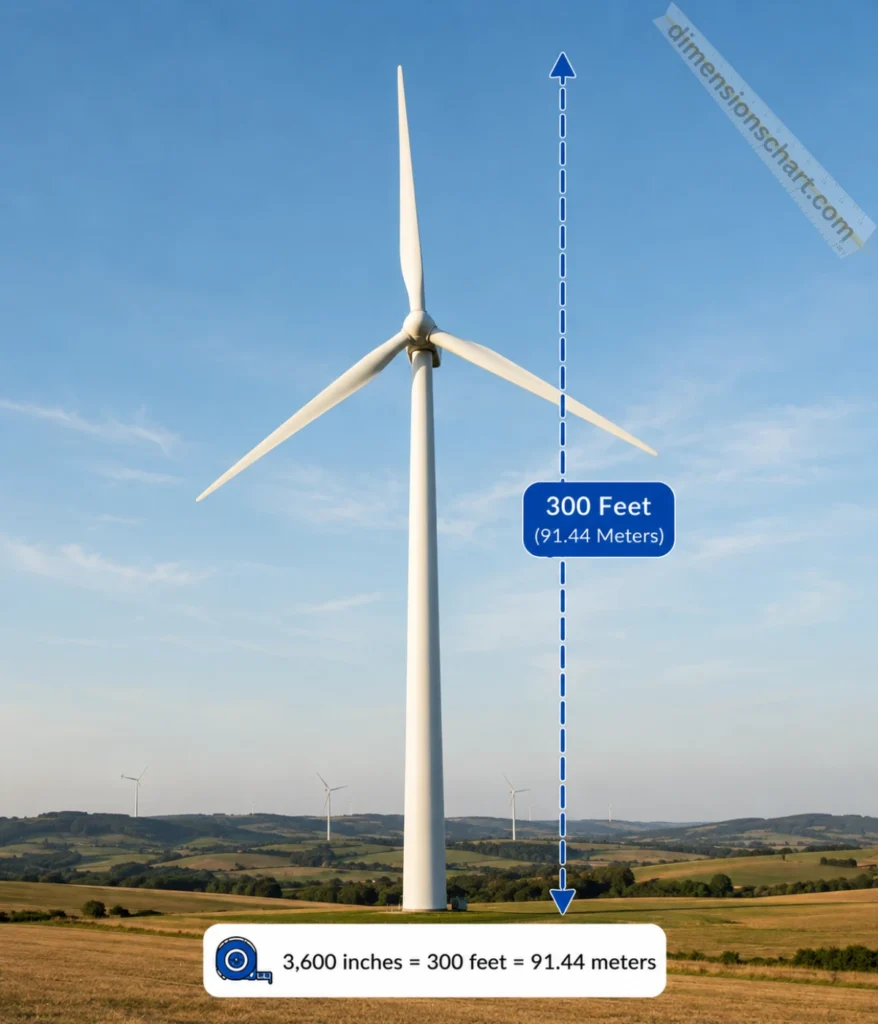
A large onshore wind turbine tower stands approximately 300 feet tall from ground to hub, the standard height used by GE, Vestas, and Siemens Gamesa across American wind energy corridors in Texas, Iowa, and Oklahoma.
The U.S. Department of Energy confirms 300-foot turbine towers as the new standard hub height for American wind farm installations, making them the most rapidly multiplying 300-foot structure visible across the Great Plains today.
Medium Cargo Ship or Passenger Ferry
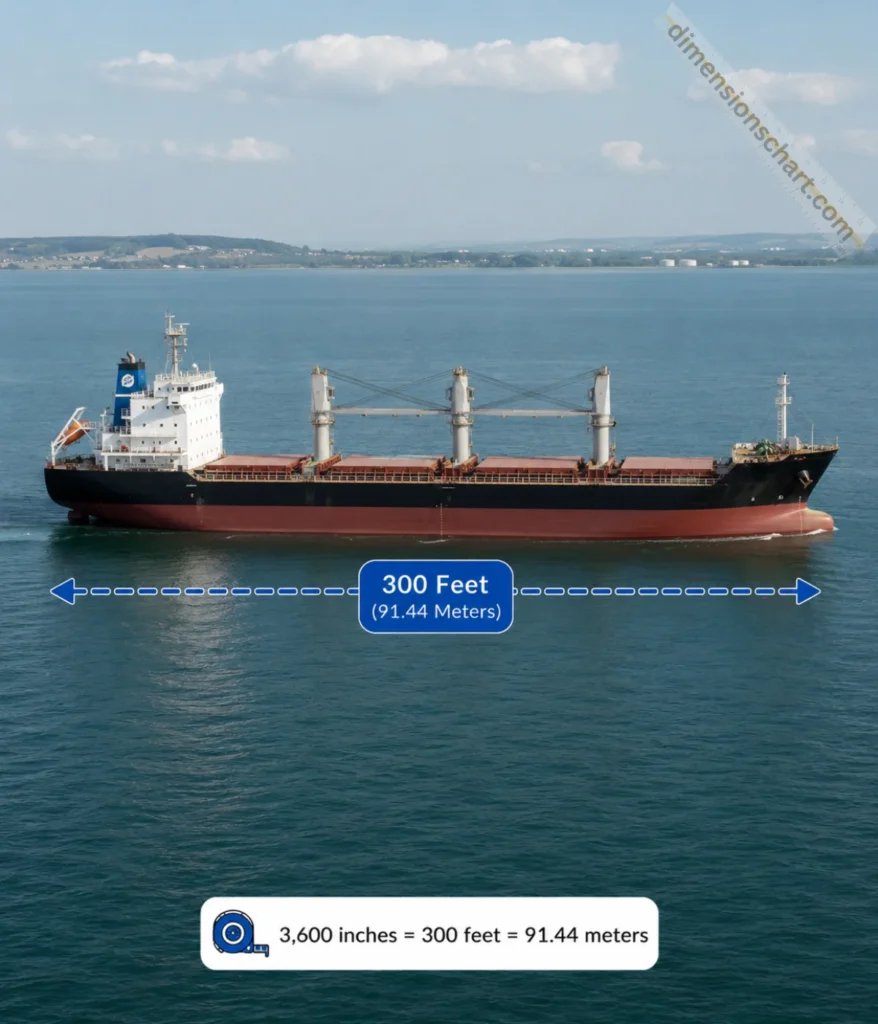
A medium-size cargo ship or large passenger ferry measures approximately 300 feet in total hull length, operating daily on U.S. coastal routes, Great Lakes passages, and Pacific Northwest ferry corridors.
Washington State Ferries and the Alaska Marine Highway both operate 300-foot-class vessels as their primary passenger fleet, making this one of the most practically experienced 300-foot measurements for Americans along U.S. coastlines and waterways.
Urban Planning — 300 Feet Walking Through the City
In cities across America, 300 feet is built directly into the street grid that millions of residents walk through every single day.
One Standard City Block
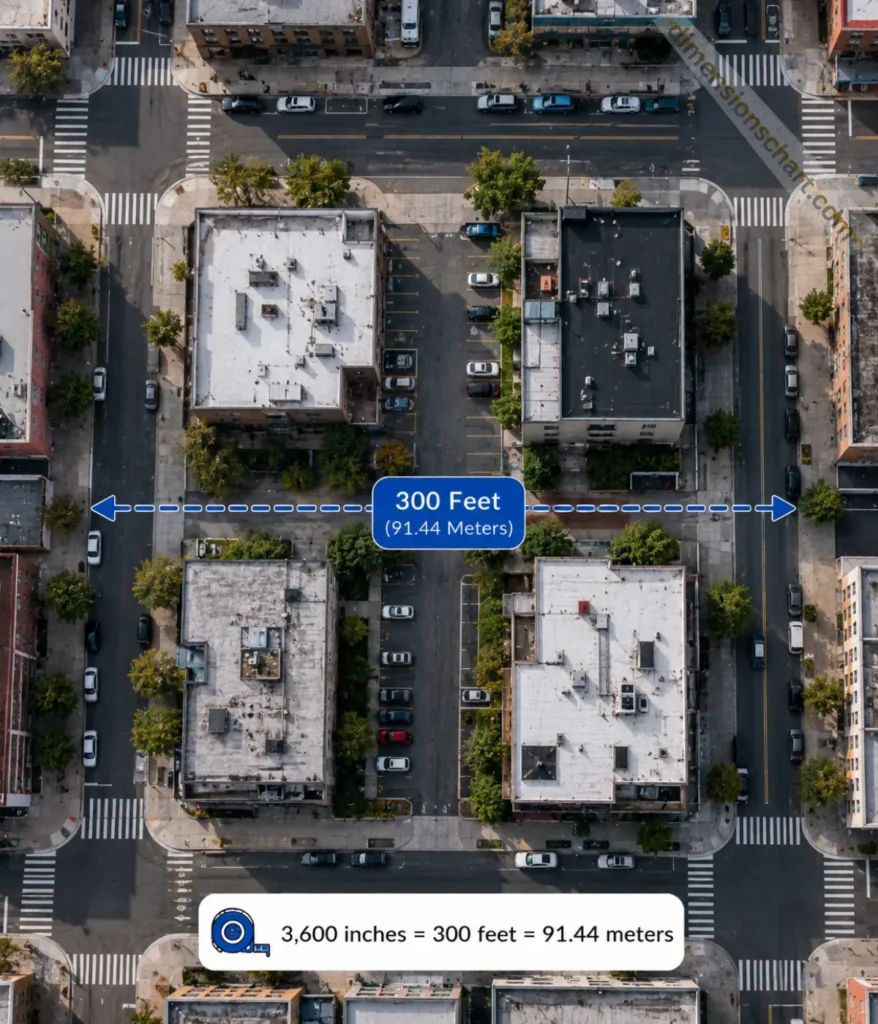
A typical U.S. city block measures approximately 250 to 300 feet, with Manhattan blocks commonly reaching close to 300 feet depending on the specific street grid location.
Urban planners built this 300-foot block dimension into American city design during the 18th and 19th centuries, and walking one full block takes roughly 60 to 68 seconds at a normal pace.
Conclusion
Whether you’re standing at a football field, looking up at a 30-story building, or walking a single city block, 300 feet surrounds you in the structures, nature, and streets of everyday American life. Use any one of these 8 real-world references and you will never struggle to picture this measurement again.
FAQ’s
What is 300 feet long in real life?
An NFL football field from goal line to goal line is exactly 300 feet — the most precise and universally recognized real-life example of this measurement in the United States.
How many stories is 300 feet tall?
300 feet equals approximately 28 to 30 stories in a standard American building, based on the typical 10-foot floor-to-floor height used in U.S. commercial high-rise construction.
How long does it take to walk 300 feet?
At an average walking pace of 3 mph, most people cover 300 feet in roughly 60 to 68 seconds — about one comfortable minute of walking at normal speed.
Is 300 feet the same as 100 yards?
Yes — 300 feet equals exactly 100 yards, which is the standard length of an NFL football field from goal line to goal line, not including the end zones.
How far is 300 feet visually?
Stand at one goal line of a football field and look to the opposite goal line — that green rectangle is exactly 300 feet and the most reliable instant visual reference available.
What fraction of a mile is 300 feet?
300 feet equals approximately 0.0568 miles — just under one-eighteenth of a full statute mile by standard American measurement convention.
How many cars lined up equal 300 feet?
At an average car length of 15 feet, exactly 20 standard cars lined bumper to bumper equal 300 feet — a simple, practical reference anyone can use immediately.

Burhan Ali is the founder and author of DimensionsChart.com, providing accurate size charts, measurements, and guides for smarter buying decisions.